Tuesday, 22 December 2020

A Sunshine Maker's Bazaar In Subiaco... Christmas, 1910. Part 1.

A Sunshine Maker's Bazaar In Subiaco... Christmas, 1910. Part 1.

My favourite research and writing topic...the children of Western Australia in their own words. And so the story of the members of the Sunshine League in Subiaco continues. Those adventures of members and in particular, members from Subiaco have been written about in previous blog posts.    

In the early 1900s many of the children in Western Australia, Perth and Subiaco, entered competitions and shared aspects of their lives through letters and essays in the 'Children's Pages' run by Uncle Tom and Auntie Nell at the Daily News newspaper. 

The children became members of the Sunshine League, a charitable organisation initiated by Uncle Tom, the original editor of the 'Children's Pages' at the newspaper. The object of the Sunshine League was "to train children in sets of kindness and love, believing that such sets bring blessings to themselves and others". The motto was "there is nothing greater or more beautiful thing in all the world than kind deeds and the humblest child can do them." Children wrote to Uncle Tom and Auntie Nell asking to become members who were known as 'nieces' and 'nephews'. 

There was no membership fee but those members who wanted to could make a donation or actively raise money for two causes the 'Orphans Christmas Cheer Fund' and the Children's Hospital Cot Fund. Those events were annual features in children's pages. Many children donated  money on a regular basis and their names were published in the newspaper. 

In 1910, over one hundred and ten years ago two members of the Sunshine League, Thelma M'Callum and Feda Miller organised a bazaar at Thelma's home at 27 York Street. Subiaco.  Thelma and Feda wrote a letter to Auntie Nell describing the event and to thank her for coming. While it is difficult to know exactly how old Thelma and Feda were at the time their letters appeared in the Daily News they were in the section of Second Class (Over eight to 12 years) which means they were between eight and 12 years of age. The event was described by Auntie Nell, editor of the 'Children's Pages' of the Daily News at the time. The post is copied below. 

The next post post "Orphans Christmas Cheer Fund...Christmas 1910. Part Two contains a description of what the money raised was for and what institutions and orphanages received them including those in Subiaco. Part Three is about raising money for King Edward Memorial Hospital in 1933.

The articles are from Trove, the database at the National Library of Australia. No copyright infringement intended. 

The Daily News, 20 November, 1910.

"...27 York-street, Subiaco. My dear Auntie Nell, - Our bazaar passed off very successfully last Saturday afternoon, and in beautiful weather. We had a splendid attendance of adults and children, every article being disposed of. With the result of our efforts we are able to hand you a grand total of ' £5 8s which will help the thermometer rise for the Orphans' Xmas Cheer. 

We were all delighted at having you amongst us, Aunt Nell, and pleased that you came out and took such an interest in us. We wish to thank the following for donations: — Messrs. W. Savage, Darbon, Maitland, E. M. Lukin, Bantock, Kinsella, the matron and staff of the Claremont Hospital for the Insane,  and many others who gave us willing help.  Good-bye, dear Aunt Nell, accept fond love and kisses from your loving nieces, THELMA M'CALLUM. FEDA MILLER. 

My Dear Thelma and Feda,— Your letter will, I know, be read with interest by many members of the Sunshine League, and they all, know join with me in congratulating you both on the great, success of your bazaar. The sum of £5 8s. Is splendid, and I am sure exceeds any sum before raised by two little girls in connection with the Sunshine League. I was pleased to be with you and to meet you all and my only regret that I had to hurry away. Will you both accept very many thanks from me for the kind thought which prompted you to work so energetically and to such purpose for the little orphans Christmas cheer. With much love and a kiss to you both, yours lovingly, Auntie Nell..." (Daily News, 12 November 1910).


Daily News, 12 November 1910

Conducted by - AUNTIE NELL.

My dear Nieces and Nephews,— You will notice that the thermometer, for the Orphans' Cheer has gone up with a big jump during the week. Doubtless many of you are curious to know the cause of this sudden ascent on the part of the thermometer, so I will gratify your curiosity. 

Two of my little Subiaco nieces, Thelma M'Callum and Feda Miller, held a very successful bazaar last Saturday, and as a result of their effort the sum of £5 8s has been handed to me for the Orphans Christmas Cheer. 

Now don't you all think that simply splendid? It just shows what Sunshine-makers can accomplish if they set to work with a tender, kind thought in their hearts for the welfare and happiness of those less fortunate than themselves, combined with a determination to succeed.

When I arrived at Mrs. M'Callum's home last Saturday afternoon, the lawn at the back of the house presented a very gay appearance. Dozens of happy faced children dressed in pretty white frocks, a large number of them I was glad to notice wearing the bright red rosette — our membership emblem, as well as a large number of adults, were busy purchasing from the dainty stalls laden with all manner of pretty dolls, d'oyles, bags, pincushions, trayclothes and dozens of other pretty articles too numerous to mention. 

Mrs M'Callum and Thelma presided over the fancy stall and bran pie, whilst Mrs. Miller and Feda had charge of the refreshment stall, where a brisk trade was experienced. This stall, was prettily arranged with flowers, delicious home-made sweets, cakes and scones; and quite close was a most attractive ice-cream, jelly, and cool drinks stall, which was patronised in strong numbers  particularly by the juvenile visitors present. 

All the stalls carried out the League's membership emblem by the introduction of crimson drapings and rosettes, artistically arranged, and both Thelma and Freda had donned their pretty crimson rosettes. The whole effect was enhanced by the addition of numbers of colored Chinese lanterns and flags, which swung gaily from, the awning in the afternoon breeze. 

Again in the evening business was brisk, and 'perhaps the most' exciting, and merriest-time of all was when Mr. M'Callum assumed the role of auctioneer, and held an auction sale of a few sold goods. Mr. M'Callum is to, be congratulated on the excellent portrayal of the character. 

The thanks of the League are greatly due to those who worked so arduously to make the bazaar a success, and I know you all Join with me in thanking most heartily Feda, Thelma, Clyde, Mr. and Mrs. M'Callum, and Mr and Mrs. Miller for, all their kindness and trouble in forwarding the fine, substantial sum of £5 8s., the proceeds of the bazaar, to our League Orphan's Cheer Fund. 

You will notice by the advertisements in another column of the Children's Page that two more - bazaars are to eventuate, Ailsa's next Saturday, and that arranged by Etta Holli - a very loyal and useful Sunshine maker at her home at South terrace, South Fremantle, the following; Saturday afternoon.  Etta extends a very cordial invitation to all the Perth, nieces and nephews and their friends to be present, and I know that many charming articles are to be displayed. I'm looking forward to seeing Sunshiners from near and far today week, and am very anxious, to meet you all. I want you all to be sure and come and introduce yourselves to me; also I should like you all to wear your red rosettes — then I cannot possibly mistake you. 

Quite beautiful and novel wares will be seen at Ailsa's bazaar, and she has been promised the loveliest flowers and pot plants, and the refreshments and icecream stalls are in the hands of Mesdames Mantova and Miller respectively, assisted by a bevy of dainty Sunshine-makers and the magic fairy well promises many surprises and attractions for the small folks. Goodbye, dears, until nest Saturday, with much love to one and all. Yours lovingly AUNTIE NELL.

The Orphans' Xmas Cheer Thermeter from 1910...Thelma and Feda's names have been included. 


Sunday, 20 December 2020

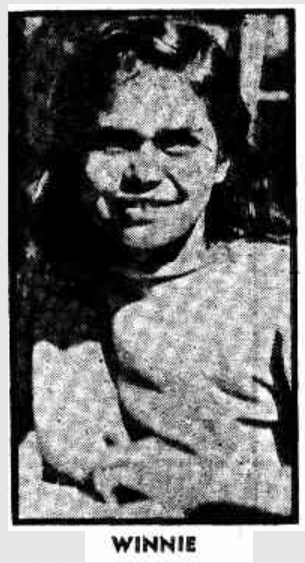
Winnie An Aboriginal Girl In Subiaco (1946).

Winnie An Aboriginal Girl In Subiaco (1946).

This is the story of an Aboriginal girl who found herself at injured after being kicked in the hip by a pet cow and at the Children's Hospital in Subiaco. She had osteomyelitis, an abscessed condition of the hip.

There is a photograph of the young girl with a wonderful smile. The story attached to the photograph tells us one of a bright young girl Winnie who despite never having been to school was intelligent and a quick learner and had achieved second standard in just over eight months. 

The article does not tell the story of children being taken from their family and everything they know to live in an orphanage. Despite obviously being bright Winnie's future was being trained as domestic help. 

The articles are from Trove, the database at the National Library of Australia. No copyright infringement intended.  

Daily News, 24 August 1946.

Education Results From Kick

A dusky-skinned, happy little girl is learning to read and write in the Children's Hospital, Subiaco because she was kicked in the hip by a pet calf.

She is 13. Eight months ago she could not read and write. Today she is an earnest little pupil who has reached second standard in some subjects. Winnie comes from the Great Southern area. 

She Is one of a family of eight who must suffer because their skins are a little darker than white children. Schooling has come to her only because she is in hospital. 

But she can learn as well and quickly as white children. She is very intelligent and diligent 

She learnt her first lessons when she was in plaster and did her school work lying on her back. Now she can walk about, sit at a table to study. 

Winnie has had osteomyelitis, an abscessed condition of the hip bone. 

Her father is a shearer. She was sent to Perth for treatment from an orthopedic surgeon. 

But her friends at the Children's Hospital want Winnie's education to go on. They would like her to stay in Perth and attend a school. Her parents have agreed to this plan if a home can be found for her.

Daily News, 30 August 1946.

Winnie 13 Gets A New Home

Thirteen-year-old dusky-skinned Winnie who has been in the Children's Hospital, Subiaco, has been given a home where she can continue with her education. She has been received by St. Joseph's Orphanage, Subiaco. 

On Saturday, Winnie went to her new home where she was welcomed by people who have a 'soft spot' for dark-skinned children. 

But before she left the hospital, where she had made many friends, she was given a pleasant surprise. 

A parcel was sent to her from the Mother Superior of St. Joseph's Orphanage. Winnie found a pair of shining new shoes, a new bright red jumper and a pleated skirt, attractive new underclothes. 

She had never been to school until she entered the Children's Hospital. She had to stay on her back for some time because she had a diseased hip. But she learnt to read and write and gain second standard within eight months. 

Winnie comes from the country, and if she had not been offered a home in the city, her education would have ceased. Now, she will get a full education and also be trained in domestic science.


A History Of Orphanages And Children's Institutions In Subiaco.

 A History Of Orphanages And Children's Institutions In Subiaco.

This post provides a brief background on the history of orphanages and children's institutions in Subiaco for the next post about Winnie an Aboriginal girl who found herself in St. Joseph's Orphanage in 1946 after being kicked by the pet cow in south of Western Australia.

This history is from the document 'Aboriginal Histories in the City Subiaco' produced for the City of Subiaco in 2008 (Jebb, M. A. & Stella, L.). No copyright infringement intended.

"Orphanages and children's institutions in Subiaco

From 1850-1950 many instutionalised Aboriginal children were sent to New Norcia Mission. Bishop Salvado, who established New Norcia, played a major role in the promotion of ideas which in the Industrial Schools Act of 1874. The Act prevented parents from demanding the release of their 'native and half cast' children from any part of the colony to New Norcia until they were 21 years of age. 

New Subiaco, the Benedictine Monastery closely linked to New Norcia, was build in 1859 over looking Hersmann's Like in Ruislip Street, now in the Wembley and West Leederville area. In 1872 it became the St Vincent's Boys' Orphanage. It had 25 acres of olives and vineyards, which provided an opportunity to teach the boys horticultural skills.

The Sisters of Mercy came to WA in 1846 and in about 1848 established St Mary's School for Aboriginal Girls, at Victoria Square Perth. In 1868, eleven girls between the ages of 4 and 10 years were moved to the Convent of Mercy and in 1871 the old building became the St Joseph's Girls' Orphanage. In 1876, after an outcry about the treatment of a child at St Vincent's, the Sisters of Mercy took charge of the establishment. St Vincent's also took children who had been convicted of criminal offences and both it and the St. Joseph's Girl's Orphanage took children who had only parent who could not care for them. In some cases, children were maintained at the orphanage by a parent. 

In 1874, St Vincent's Boys' Orphanage was taken over by the Christian Brothers who had arrived in Perth in 1894. They built a new orphanage at Clontarf, which they occupied in 1901, at which time the girls were transferred from Perth to the Subiaco establishment, which was under the control, at this time, of Mother M. Benedict Murphy. Extracts of stories from Aboriginal people who were at St Josephs and other institutions in the area of Leederville and Subiaco in the 1930s and 40s were referred to in the Aboriginal Legal Service report Telling Our Story.

In 1933 the government opened Sister Kate's Children's Home in Victoria Park especially for Aboriginal children who were fairer skinned. Children who were considered too 'dark' to be absorbed in European society were left at Moore River Settlement or removed to Missions in the north and eastern goldfields." 

References 

Jebb, M. A. & Stella, L. 2008. 'Aboriginal Histories in the City of Subiaco. City of Subiaco' : Subiaco W.A. 


Aboriginal Children In Subiaco...The Early Years.

Aboriginal Children In Subiaco...The Early Years. 

This post provides a brief background on the history of Aboriginal Children in Subiaco for the next two posts on orphanages and children's institutions in Subiaco and the next post about Winnie an Aboriginal girl who found herself in St. Joseph's Orphanage in 1946 after being kicked by the pet cow in the south west of Western Australia.

This history is from the document 'Aboriginal Histories in the City Subiaco' produced for the City of Subiaco in 2008 ( by Jebb, M. A. & Stella, L.). No copyright infringement intended.

'...Stolen Generations : Aboriginal Children in Subiaco

European attempts to educate, employ and assimilate Aboriginal children in the Perth area began in the 1840's with Anglican schools at Fremantle and Guildford, a Wesleyan Mission school run by Reverend Smithies in Perth, Bishop Rosendo Salvado's New Norcia Mission and the Sisters of Mercy school for Aboriginal children may have found themselves shifting form place to place with different schools and employers. Some may have been shifted outside their country, locked into the mission school and unable to leave. What happened to the parents is difficult to ascertain, but likely they were trying to work nearby, visiting when they could, and were amongst the people noted by Jesse Hammond and James Kennedy as living in Perth in the 1860s.

When Smithies arrived in the colony in June 1840, he was met by Francis Armstrong and rowed back to Perth by two 'ochred Aboriginal youths wearing kangaroo skin cloaks'. His school for native children was part of the wider British Government's policy response to the 1837 Inquiry into the condition of Aboriginal Peoples in the Colonies. Governor Hutt instructed Smithies to 'prevent all violence and injustices which may be attempted against' the Aboriginal people, as well as to 'promote religion and education among the native inhabitants'. Six weeks after his arrival Smithies had taken eight children into his care (see Appendix Two, copy of lists of children). These children slept at night at the house of Francis Armstrong and at first, were taken into Wesleyan homes in Perth settlement during the week days. One of them, Weel-Beer was listed as staying with Mr. Trigg who owned the lime kiln south of Herdsman Lake. 

The Governor granted Smithies 1/- per child to provide for their food and for an apartment for them to sleep in near the current Wesleyan buildings at the end of Hay Street. With a few years, older Aboriginal people were moved to work in the gardens on two Mission allotments between Wellington and Roe streets. In 1843 older Aboriginal people were moved again to Guililup (now Wanneroo) which Smithies referred to as 'Alder's Lake'. The mission, partly because it was too wet in winter, but mostly because of illness and deaths amongst the children. Parents withdrew the children and the remaining group moved to York. It closed in 1855. 

An Anglican school for Aboriginal girls was opened at Middle Swan in the 1840's. Girls were taken from there to Albany in the 1850's. Reverend King's school for Aboriginal children at Fremantle was also moved to Albany in 1850. In 1871 the children were transferred to Perth to land 'adjacent to Bishop's House' (corner of St Georges Terrace and Spring Street) that became known as the Bishop's 'Native and Half Caste' Institution. In 1888 the children were moved to the Swan Native and Half Caste Mission on the Middle Swan site. This became the main Anglican mission in the Perth area for Aboriginal children. When children reached the age of seven they were transferred to Swan Boy's Orphanage and apprenticed to employers. When the home was closed in 1921 many of the children were employed in the local Middle Swan and Guildford are, but many Aboriginal children were removed to the newly opened Moore River Settlement under the instruction from the Chief Protector of Aborigines who wish to transfer them from Perth. This 'effectively ended more than 80 years of Anglican work with Aboriginal children who were predominantly Noongar - that is to say children of Aboriginal children from the Perth metropolitan area and the greater South West...'"


Thursday, 17 December 2020

The Impact Of War On Children (1943).

The Impact Of War On Children (1943).

In April 1943 the Director of Education Mr M. G. Little addressed the annual meeting of the Subiaco Parents and Citizens' Association at the Subiaco State School on the future for children after the end of World War 2.  

The headmaster of the Subiaco State School (senior school) Mr. A. R Morrison made a really interesting observation about children that still holds true today in 2020 over 80 years on...  "The headmaster of the senior = school (Mr A. R. Morrison) said the success of the children's war effort was due to their committees whereby they governed themselves." 

The article is from Trove, the database of the National Library of Australia. No copyright infringement intended. 

West Australian, 3 April 1943.

CHILD INFLUENCES. Address by Mr Murray Little. Present-day children would be left a terrible legacy of post-war problems, said the Director of Education (Mr M. G. Little) in an address to the annual meeting of the Subiaco Parents and Citizens' Assoclation in the Bagot-road State school last week. 

There would be troubled times after the war, and parents should not think there was nothing they could do about ft. The Education Department appreciated the interest shown by parents and the work of the association, but no man was worth his salt who did not train his successors.

Children should be trained so as to have a reservoir of energy, declared Mr Little. Science brought changes overnight and man needed to be adaptable to them. The facilities for education and periods of leasure must be extended. Education was not confined to what went on in school from the age of 3 up to 21 every influence was an education for good or bad. 

To the three familiar agencies of the home, the school and the church, there must now be added forms of entertainment and the street. The schools must now do more corrective work: see to the health of pupils and combat influences destructive of their morals. The Director advised the children to get as much as possible out of their years at school and not to be in a hurry to leave.

"Once you start work you can't stop," he said. They were doing a splendid job with their various activities to help the war effort; why not turn their war committees into social groups after the war to work for others during peace? The more people worked for others the happier they were. 

Only the useful could be happy. The headmaster of the senior = school (Mr A. R. Morrison) said the success of the children's war effort was due to their committees whereby they governed themselves. Educationists must keep well before them a lofty conception of freedom and of morality. 

Mr J. P. Bathgate presided. Office-bearers elected for the ensuing year included: The Mayor and Mrs Cardell-Oliver, patrons; Mr Bathgate, president; Messrs C. A Perry and J. Leonard, vice-presidents; and Mr J. E. L. Lander, secretary. 


Children And The War Effort In Western Australia...(1942).

Children And The War Effort In Western Australia...(1942).

This post continues on from the previous two posts about the contribution of children from the Subiaco State School and the Thomas Street State School on the home front during World War 2.  

For example, the children of the Subiaco State School collected much needed resources for recycling like metal tops, rubber and second hand clothing, rugs and blankets for those in need in England. They had sent much needed parcels to England. The children with the assistance of their teachers had learned cooking, first aid and stretcher skills and were able to demonstrate how they were prepared to enter aid raid shelters they had constructed in an emergency and even how to defuse a bomb. The children and their families raised money for organisations providing relief to those affected by the war.

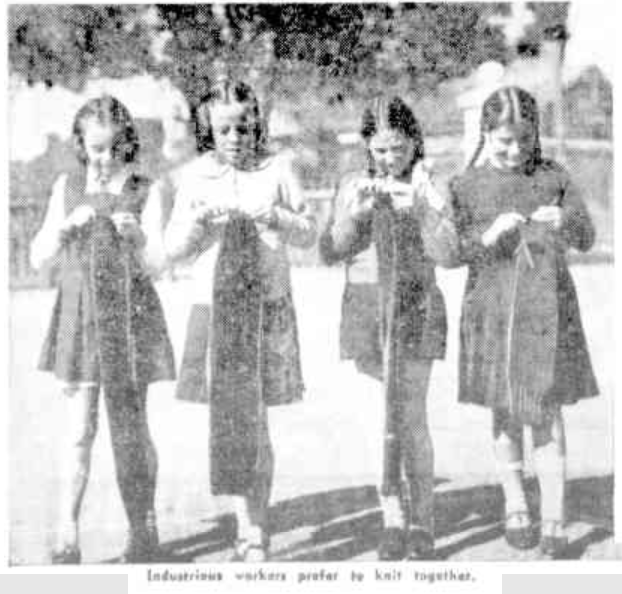
The children of Thomas Street State School activities included collecting and recycling old metal and tin foil, knitting garments and blankets, making sure sewing machines were ready for repairs, making donations, collecting and sorting knitted articles to be sent away and collecting old newspapers.

The following articles are about children from the State of Western Australia and how they were contributing including providing tea and sugar for troops on leave via the 'tea and sugar fund', giving their pocket money and collecting seafood to sell making substantial contributions. They were also being asked to follow directions if there was an air-raid and to look after other children if they needed assistance. 

It is generally recognised that children of Western Australia whether in school or home, in the city or country made a significant contribution to the war efforts on the home front. 

These articles are from Trove, the database of the National Library of Australia. No copyright infringement intended.  

Daily News, 14 August 1942. 

Children Help Troops

School children in the metropolitan area contribute materially in cash and kind to the war effort. Schools, in two groups, are viewing with each other to provide tea and sugar for troops on leave.

Individual contributions are small, a penny or a teaspoonful or two of tea or sugar, but the aggregate is substantial. Last month's contribution by one section, that extending from South Perth to Carlisle, Inglewood and Bassendean, was £35 in cash, 1081b. of sugar and 71b of tea. This month the other section, comprising Osborne Park, Mt. Hawthorn, Subiaco, Claremont and other adjacent suburbs to Mosman Park, will weigh in with its quota. In June this group made a very useful donation. 

'We call it our tea and sugar fund,' said Mrs D. Seeligson, delegate to the Metropolitan Teachers' Patriotic Group, 'and the kiddies are extremely keen. Every day they bring their contribution to school and keenly watch the activity of other children and the other group so as not to be beaten. 'I visit the schools in each group in turn and I am always impressed by the patriotic determination of the kiddies to do all they can to, provide amenities for our fighting forces.'

West Australian, 16 September 1942.

WAR EFFORT. CHILDREN LEND A HAND. 

Correspondence Pupils' Work. 

Examples of what correspondence pupils are doing to help the State schools' war service effort have been given by Mr C. Eakins, who is in charge of the correspondence classes. It was not unusual, he said, for these pupils to sacrifice their pocket-money and send it to the fund. A little girl opened her money box and sent her entire savings of 4/9. Another girl sent the prize money she won at the local show. 

Quite a number of children who earned small weekly sums for doing odd jobs about the farm, such as milking, or collecting eggs, or looking after the farm animals sent in regular contributions. Several children trapped rabbits, and some of the bigger boys shot kangaroos, and sent the money for the skins. Others raised money by growing and selling vegetables. A number of children who kept fowls of their own sent their egg money. 

One little girl recently sent 2/6 which she got for the sale of her pet rooster. At shearing time the children often sent bags of wool, either the clip from their own pet lambs, or wool earned by them for helping in the shearing shed. One boy sold his wool for £1/17/ and sent every penny. A very little boy who had no money to send, but who badly wanted to help, decided to sell his pet lamb Snowy. At the next local sale Snowy was duly put up for auction, and realised 15/. The auctioneer, learning of the little boy's sacrifice, donated another 5/, and it was a very proud boy who sent £l to help win the war. 

Two girls, who until recently were living at a small coastal town, alone raised more than £60 by collecting oysters and catching fish, and selling them to their friends and to the crews and passengers of passing vessels. Assisted by their teacher, the girls, and many of the boys, too, were engaged in making all kinds of comforts such as socks, scarves, cardigans and handkerchiefs. In 1 month alone, the department had issued more than 500 skeins of wool.

Help had also been given to the Old Metals Branch. The boys had scoured the countryside, driving around in spring carts and trucks, and gathering all the old, unwanted machinery, empty bottles, old motor tyres and other waste material. Up to date they had railed several trucks of material direct to the Old Metals Branch at Perth and had also delivered large quantities to various local depots. 

In addition to all this the correspondence pupils were helping by the purchase of war savings certificates, an example being set by their teachers who had established a War Savings Group and who had, within the last 2 years; purchased certificates exceeding £500 in value.

Northern Times, 31 January 1942.

Girl Guides A GREAT WAR EFFORT

Many people have contributed to the war effort, but few locally have done more than Mrs. F. S. Edmeades who, in a quiet way in the last 12 months, has done much with the assistance of the Girl Guides, in the relief of the air raid victims of England, whilst teaching the guides the art of needlework Mrs. Edmeades assisted them in the production of clothing and in less than 12 months over 1,000 articles have been sent to headquarters in Perth. This is indeed. a commendable achievement. However, much of the success of the movement, states Mrs. Edmeades is attributable to the support of the public who provided adequate funds and material to keep the guides employed. In view of this success it is unfortunate that a successor to Mrs. Edmeades cannot be found to carry on this work. The following articles, which have been forwarded to Perth, represents the past two months work:

Seven pairs girl's pajamas. 4 pairs boy's pajamas, 32 pairs bloomers, 2 children's frocks, 10 baby's nightdresses, 10 shelter bonnets, 1 boy's knitted suit, 2 boy's knitted jumpers, 2 boys' trousers, 2 toys knitted sox, 7 baby's bonnets, 3 baby's knitted sets, 1 pair baby's pilchers, 4 baby's singlets, 1 pair baby's rompers, 2 baby's matinee jackets, 1 shawl, 6 pairs bed socks, 20 pairs bioteea, 3 scarves, 2 bodices, 9 squares.

Mrs. Edmeades wishes to thank the ladies who have helped her in this work and hope. They will still support the Girl Guides War Work Party. Finished articles may be sent to Madames Tonkin and Whitworth who have kindly undertaken to forward them to headquarters. It may interest everyone concerned to know that this movement is affiliated with the Red Cross Society and articles are suitable to send overseas are distributed to the various organisations such as the Comforts Fund, Seamans Mission, Lucklow Hospital and any others needing help in that direction.

Pingelly-Brookton Leader, 2 July 1942.

WHAT CHILDREN CAN DO TO ASSIST THE WAR EFFORT.

Some children, wonder what they can do to assist the War Effort; they feel too young to do much. There are, however, many ways in which they are able to render aid to the community. They can join the Boy Scouts, or Girl Guides and study First Aid for cases of emergency. Everybody knows something of the wonderful work being done by the Boy Scouts. They collect scrap iron and old pieces of aluminum ware in barrows and carts. Children can also help by buying one or two War Savings Stamps each, instead of lollies. If every child did this the men who are employed in making sweets could go with the fighting forces. 

The best way of obtaining money for this object 4s to work for it and not ask parents or friends. Another way of assisting is to do as you are told in an air-raid. If at school run to the nearest trench. If you see a small child stumble and fall, pick it up and pack it to your own trench. If there are, children in your school who are willing to buy War Savings Stamps, start a War Saving Group. If you cannot organise a Group yourself, ask for the teacher's assistance. "Spend to Defend" is a good slogan. If you are asked what you would like best of all for your birthday, say you would like War Savings Stamps.


Wednesday, 16 December 2020

Children's War Effort - Thomas Street State School (1940).

Children's War Effort - Thomas Street State School (1940).

In 1940 Australia was involved in World War 2 and all people including school children were  playing their part contributing to the ultimate success. 

A lot of the involvement of children and schools on the home front was recorded in articles and photographs in local newspapers like the Daily News, the West Australian, the Sunday Times and Western Mail. 

In July 1940 the West Australian newspaper reported on the activities of the children at Thomas Street State School...

"...VARIOUS ACTIVITIES. Having established sufficient credit in the bank with parents' voluntary subscriptions to provide for the upkeep of the grounds, and other school expenses for the coming year, the Thomas-street State school is diverting its usual call on parents to patriotic objectives. 

Though patriotic work has been going on for months and parents have been circularised with an appeal to continue their periodical donations which in future will be devoted to providing comforts for the troops, to a fund to provide an ambulance from all the schools in the State and to sending away special parcels for former pupils of the school now with the forces. 

Many of the children are being taught to knit, and the quantity of socks. mitten, scarves and pullovers which they can produce will depend on the supply of wool obtained. The woollen goods will go to the three arms of the fighting forces and the 10th Garrison Battalion. 

The school is also a clearing house for reading matter for the troops. It is also acting as an agent for collecting scrap metal. newspapers and bottles. Parents have been asked in the circular also to use the school-savings bank to buy war savings certificates..." (West Australian, 4 July 1940). 

In an article in the Western Mail in May 1941 the newspaper recorded and shared photographs of what the children of Thomas Street State School were doing for the war effort. These activities included collecting and recycling old metal and tin foil, knitting garments and blankets, making sure sewing machines were ready for repairs, making donations, collecting and sorting knitted articles to be sent away and collecting old newspapers.

Western Mail, 22 May 1941.

"...Since the beginning of the war, in all parts of the State people from every walk of life have answered the call to do their utmost to assist the war effort. These pictures of children from the Thomas-street State School are typical of what children in other schools throughout the State are doing to help. Their contributions and services will be of no small importance to our ultimate success..."

The articles and photographs are from Trove, the database of the National Library of Australia. No copyright infringement intended.


Tuesday, 15 December 2020

Children's War Work - Subiaco State School (1942).

Children's War Work - Subiaco State School (1942).

In 1942 Australia was at war. Trove, the database of the National Library of Australia contain many stories in newspapers about the contributions and sacrifices made by men and women at the front and home. 

But what about children ? Many children had fathers, brothers, grandfathers and other relatives fighting at the front and they wanted to do their bit. Trove contains stories about how children at school around Australia contributed to the cause. The children had joined organisations like the sea scouts, scouts, cubs, brownies, girl guides and ARP Wardens becoming engaged in a number of essential activities due to a labour shortage of men and women engaged in other activities. 

In July, 1942 the West Australian provided an article about a visit by the Lieutenant-Governor Sir James Mitchell and Lady Mitchell and other members of the community to see what the children of Subiaco State School were doing for their part. Their visit was recorded in the West Australian.  

The children of the Subiaco State School had collected much needed resources for recycling like metal tops, rubber and second hand clothing and rugs and blankets for those in need in England. They had sent much needed parcels to England. The children with the assistance of their teachers had learned cooking, first aid and stretcher skills and were able to demonstrate how they were prepared to enter aid raid shelters they had constructed in an emergency and even how to diffuse a bomb. The children and their families raised money for organisations providing relief to those affected by the war.

The war changed children's lives forever. Many lost their their fathers, brothers, grandfathers and other family members. Other children were separated from those they loved for a long period of time and their lives were to be changed forever because of what they had experienced. For many children their mother and older siblings had to leave home to work and they spent less time together as a family. There were disruptions and rationing including food and petrol that continued long after war. 

The article and photographs are from Trove the database of the National Library of Australia. No copyright infringement intended. 

West Australian, 9 July 1942. 

"EXAMPLE TO ALL." CHILDREN'S WAR WORK. 

Subiaco Demonstration. 

Subiaco State school was a hive of industry yesterday morning when pupils staged a practical demonstration of the wide range of their activities in helping the war effort. The occasion was a visit paid to the school by the Lieutenant-Governor (Sir James Mitchell) and Lady Mitchell, attended by Col C. H. E. Maning, to see what the boys and girls were doing. They were received by the headmaster (Mr A. Morrison) the member for the district (Mrs Cardell-Oliver, MLA), the Mayor and Lady Mayoress (Mr and Mrs W. Richardson), and a guard of honour comprising sea scouts, boy scouts, cubs, brownies, girl guides and ARP wardens. The Chief Inspector of Schools (Mr W. Rockliffe) and Inspector Box, of the Education Department, were also present. 

The school's welcome began with the playing of the National and Australian anthems, accompanied by the school "kazoo'' band, in which the instruments used were homemade. Brief speeches were made but chief interest centred on the work being done by the pupils and on an ample spread of "morning tea" cooked, prepared and served by the girls of the domestic science centre. His Excellency expressed his pleasure at seeing the girl's ability to do such an excellent job entirely unaided. 

Among other things a collection of about 50,000 metal bottle tops was seen. Another of scrap rubber ranging from heavy motor tyres to babies' dummies was computed to weigh 2 tons. Altogether 22 groups busily carrying on their jobs were visited. Mass production of slippers made from felt hats and numerous articles of clothing for the relief of sufferers from aerial bombing in England was seen in full swing. Mr Morrison said the school had just received word of the safe arrival in England in March of their last consignment consisting of 100 each of rugs and blankets, frocks, trousers, jumpers, skirts, pullovers, vests, petticoats, scarves, bloomers, caps, sets of babies' "woollies" and pairs of sox and slippers. These, he said, had been on view at a London comforts exhibition. 

Other activities included the making and roping of camouflage nets and sand mats, ropemaking and splicing rope loops for carrying stretchers, and knitting of every description, including hot water bottle covers. Cards for 100 children to be blood-grouped this week were cut by a guillotine made at the school and names, ages and groups were typed in by the typing section. There were displays of first aid and stretcher drill and putting out an incendiary bomb by a fire squad equipped with a stirrup pump. Proceedings concluded with dispersal to air raid shelter of over 1,000 children in "pixie" capes of double lined hessian. 

Sir James Mitchell expressed himself as being highly gratified with all that he had seen. On advising the children to save, he was surprised and pleased, he said, to learn that the school held 864 war savings certificates. Mr Morrison said that during the past month alone the children had bought 1,862 stamps worth £42/7/. In leaving, Sir James said that the pupils' efforts were an example to be emulated by all in the community.

Western Mail, 30 October, 1941.

Children of the Subiaco State School seen with a display of some of their war work. They have already sent many parcels to children of bombed London. 


Australian Nurses Receive The Military Medal...(1917).

Australian Nurses Receive The Military Medal...(1917).

So what kind of roles did women play at the front in World War 1 ? Trove, the database at the National Library of Australia contains many articles about the kind of services being provided by women at the front and on the home front during World War 1. 

Many of those articles are about individual women, some of them untrained but many of them trained to be nurses and doctors from Australia and other parts of Europe who were extremely courageous doing what ever they could to help the men fighting at the front.

In 1917, the Weekly Times from Melbourne reported that several nurses including Sister Alice Ross King and Sister C. Deacon from Perth had received the Military Medal which was awarded to nurses who had displayed courage and bravery under fire.

The article is from Trove, the database of the National Library of Australia. No copyright infringement intended. 

Weekly Times, 6 October 1917.

NURSES DISPLAY BRAVERY WORKING UNDER FIRE

In August news reached Australia that Sister Rachel Pratt, a Victorian, had been wounded by the enemy.

Further significant evidence indicating that the military nurses are closely sharing the dangers of the soldiers whom they tend was furnished last week by the cabled news that Sister A. Ross King (Melbourne), Staff Nurse M. J. Derrer (Brisbane), Sister C. Deacon (Perth), and Sister D. W. Cawood (New South Wales) had been awarded the Military Medal.

The award of the Military Medal to a nurse is unusual, and is only made when she has displayed bravery under actual fire. The usual method of recognising an army nurse's services is to decorate her with the Royal Red Cross.

Sister Alice Ross King is a trainee of the Alfred Hospital, and was born in Ballarat. She left Australia with the first military nursing unit, and came back on a hospital ship in August, 1915, leaving for active service the same month.

For some time she was attached to No. 1 Australian General Hospital, France. Last June, with three other nurses, while on her way to a casualty station, she was hung up in Flanders. She reached her destination later, and in July wrote some interesting letters of her experiences to a Melbourne friend.

The following extracts give some idea of how this nurse probably has won recognition.

"We had a hard hit from a bomb last week. Fritz gave us three—one fell just outside a pneumonia tent, blowing the whole show to pieces. It was ghastly. There were 18 casualties. Had it arrived two minutes later it would have got me, too.

"It is strange how some places seem fated to be hit. This tent had been perforated in several places during the afternoon from a bursting shell. One piece of shell, weighing 10lb., fell with-in six inches of a patient's head. This boy was killed later by the bomb. We are about 20 minutes' walk from the firing line."

Sister King was attached to the Alfred Hospital. Other positions she has held in the nursing profession include: Sister and also night superintendent at the Austin Hospital, matron at Dr. Henry O'Hara's private hospital. She is noted for her nursing skill, strength of character and big-hearted sympathies.


Sister Alice Ross-King from Wikipedia


Sister Tess Dunn...An Australian Woman At The Front In World War 1 (1916).

Sister Tess Dunn...An Australian Woman At The Front In World War 1 (1916).

So what kind of roles did women play at the front in World War 1 ? 

Trove, the database at the National Library of Australia contains many articles about the kind of services being provided by women at the front and the home front during World War 1. 

Many of those articles are about individual women, some of them trained to be nurses and doctors from Australia and other parts of Europe who were extremely courageous doing what ever they could to help the men fighting at the front.

Western Women a newspaper from that time contains an article about Sister Tess Dunn from Perth who went to the front. At the time the article was written she was working in England assisting Australia soldiers after being injured a second time. 

The newspaper was hoping to establish an Honour Roll of nurses who went to the front and was collecting names and details from friends, family and colleagues. All the names of the nurses collected and printed below were trained in Perth.   

The article is from Trove, the database of the National Library of Australia. No copyright infringement intended.  

Western Women, 1 November 1916.

SISTER TESS DUNN.

A REPRESENTATION OF THE NOBLE SISTERHOOD OF NURSES.

Sister Tess Dunn, of Perth, left for Egypt with the 1st Australian Federal Hospital, and saw several months of strenuous work in those early days. Egypt itself provided numerous hospital patients, but after the Gallipoli landing the demands made upon both doctors and nurses were heavy indeed. Sister Dunn, after passing through those trying times, was the first nurse to return invalided to Australia. After spending three months with her relatives in this State (Sister Dunn being a daughter of Mrs. Dunn, of Mount Lawley, and a sister of Mr. W. H. Dunn, the well-known estate agent and auctioneer of Perth), Sister Dunn returned to Egypt, and in due course went to Rouen in France. For a time she was on duty close up behind the firing line and, in her own words, "within sound of the guns." Sister Dunn was then invalided a second time, and sent to England. Latest advices say she is doing "light work" among Australian soldiers in England. 

Sister Dunn is a native of Ballarat, Victoria, and was trained at the Ballarat Hospital and took a special surgical and dispensary course at the Geelong Hospital, and became a member of the R.V.T.N.A. After spending a term as Sister-in-charge of Fairfield Hospital for Infectious Diseases, some eight years ago Sister Dunn to Western Australia, and held the position of senior nurse at Miss Moore's "Kareenya" Private Hospital until going "on active service."  

ASK OUR BOYS WHAT THEY THINK OF THESE NOBLE WOMEN, THE NURSES AT THE FRONT.

"Western Women" has sought to compile a 'Roll of Honour of Western Australian women at the Front, and the following list has been supplied by a member of the A.T.N.A. It is not complete and the particulars are meagre. We shall be glad if friends of Western Australian nurses on military service will supply names and particulars.

"Western Women" desires to honour and perpetuate the memory of those noble women who have done such splendid service. Cherished in many a grateful heart, "Their deeds will be held in everlasting remembrance." 

Their names should be written itt gold. The following is the list of names referred to : —Nurses Philips, Shoebridge, McCrae, James, Spaven, Brunn, Ward, Doherty, Carey, Manning, Monger, Martin, Middleton, Darcey, Scanlan, Croham, Parker, Craike, Lightbody, Negus, Smith, Denson, Ryan, Dora Simith, Sampson, Cronin, Parish, Shadford, Bridgeman, Gibbs, McGillivray, Huffhan, Coucher, Cooke, Bartlett, Tate, O'Brien, Coomer, Cobley, Saw, Miarns, Whinnie Doherty, Lane, Hamilton, Bolton. 

All the above mentioned excepting two were trained in Perth. Will friends kindly forward particulars so that, the list may be made complete and accurate in every detail? 

Last year an appeal was made by Lady Bridges for subscriptions to enable Christmas gifts to be sent to each Australian nurse at the front. Nine hundred and fifty packages containing perfume, handkerchiefs, soap, pins, chocolate, biscuits, were sent from Victoria and Tasmania. This year the appeal is made early to give every State an opportunity of contributing so that each nurse from whichever State she comes may again participate. Among the numerous articles enclosed was a small gift and enamel red roses, which was so much appreciated, that this year the committee decided upon a souvenir that the nurses may always have with them to remind them of the part they played in the war. To carry out this idea the appeal is being made for money only, for the purchase of the gift.

Arrangements for the collecting, and dispatch of gifts will be carried out by Lady Bridges, president.; Mrs. Norman Brookes, vice-president ; Miss E. Glover, honorary secretary and treasurer; Misses Bates, Crocker, O'Neill, and O'Meare.


'Did WW1 Make Women Harder In Heart ?' (1916).

Did WW1 Make Women Harder In Heart ? (1916).

The discussion on the question "Did WW1 Make Women Harder in Heart ?" was found on the State Library of Western Australia Facebook page on 15 November, 2020. The discussion addressed the issue of how WW1 changed the 'miss' or unmarried woman. 

The Facebook post was supported by commentary from an article on Trove, the database of the National Library of Australia "Has the war made women harder?", published in the Daily News newspaper on November 1916 and written by a Miss Elizabeth Ryley living through the times in London. The discussion was supported with photographs of women from the Dease Studio collection taken during the war. The post was for Remembrance Day 2020. 

While a discussion of this question is way beyond the scope of a post on a blog I would like to make a record of it here. During my research about Subiaco I have found out about many inspiring women who lead independent and successful lives who did not get married. The Post Office Directors of Western Australia show that in the early 1900's many women were not married, had employment and lived independent lives in their own homes in suburbs like Subiaco, Leederville and West Perth.   

During World War 1 women including Australians who were not married left Australia and went to the front carrying out such roles as nurses and doctors. Two of these women Jessie Downie, a journalist at the Daily News newspaper who trained and served as a nurse at the front and Nurse Sister Mary Hayes who returned and ran the Subiaco Infant Health Centre also served at the front have been included on this blog because of their contribution to Subiaco. 

There are a number of resources on the Internet that discuss women's roles in World War 1. The Australian Government Department of Veteran Affairs has produced a wonderful document called "Australian Women at War". "The purpose of this education resource is to provide teachers and students with self-contained classroom-ready materials and teaching strategies to explore the roles and experiences of Australian women during more than a century of conflict and peace operations. It covers all major wars and peace operations from 1899 to the present, and includes service roles as well as home front experiences..." 

"Australian Women at War" states about the number of women who served at the front "...416,809 Australians enlisted in World War 1, of whom 331,781 served overseas. 61,720 of these died during the war, and 137,013 were wounded.

In all, 2139 women served with the Australian Army Nursing Service, and 130 worked with the Queen Alexandra Imperial Military Nursing Service. A further 423 nurses served in hospitals in Australia. Twenty-three of these women died in service during the war..."

Trove, the database at the National Library of Australia has many stories about women including nurses and doctors who served at the front.  Many women both married and not married made significant contributions in difficult circumstances on the homefront leaving their traditional roles as homemakers and taking on the roles in jobs left vacant by their men who had gone to the front. They experienced the impact of war first hand rather than through the letters of their men away at the front.  

The original article from the State Library is copied below. Also the article from Trove, the database of the National Library of Australia. No copyright infringement intended.  

From the State Library of Western Australia Facebook page...15 November, 2020.

DID WWI MAKE WOMEN HARDER IN HEART?

Thousands of young women were left behind when their sweethearts, brothers and husbands left to serve in WWI. 

While the early Victorian “miss” was a fragile young creature, "very susceptible in matters of the heart, easily fatigued and prone to fainting on the slightest provocation". The “miss” of WWI was quite different.

While “just as sweet, just as maidenly and just as attractive”, the “miss” of 1914-1918 could read their sweethearts’ letter telling of battle and bloodshed, without falling into their parents arms in a swoon. Instead going about their daily duties with an added air of pride. 

Gone was the “pretty air of helplessness” of their predecessors, considered once to be such a “necessary incentive to masculine amorousness”. Gone the “docile, unquestioning obedience that marked the dutiful daughter and wife”.

But to say that the "miss" of the WWI had a “hard-cased little shell” in place of the tender heart, would be only to judge on the surface. While a new note had crept into the conversation of the average girl touched by war, this is not to say that she had become harder in heart.

Instead she had a clearer vision. An understanding that if she sent her men off with a whimpering ‘God speed’, it would only add to their burdens and anxieties. 

So while she set her lips grimly to keep back the tears – she had to exert mighty self-control to keep herself from physical collapse; in short, feeling just as weak as "the most vapory of Victorian maidens".

The girl of WWI prided herself on being her man’s true and staunch comrade and while her heart ached for her particular men, she was determined to keep as cheerful as she could. Taking an interest in the progress of affairs, in the understanding that the “hydra-headed monster” (WWI) must be crushed before the world could be at peace again.

These images feature young West Australian women (1914-1918) from the State Library of WA's Dease Studio collection. Many a young woman came to the studio at 117 Barrack Street during the war years, to create a pretty portrait of herself to line a soldier's breast pocket. Indeed Mr Dease offered free portraits to soldiers prior to leaving for the war and veterans.

Like letters, photographs, became vital links to loved ones through the months or even years apart. A promise of love and stability in a life filled with uncertainty.

Today the State Library observed a minute's silence for Remembrance Day. On this day in 1918, the guns of the Western Front fell silent after four years of continuous warfare. In which time more than 330,000 Australians served and of these more than 60,000 died. Lest we forget them and all those who have served in subsequent wars.

Note - This commentary has been sourced from newspaper articles appearing in WA newspapers at the time, thanks to the magic of Trove. Namely the article - "Has the war made women harder", Daily News November 1916. It provides an insight into the event but is not intended to be a definitive history.

ABC Perth The West Australian PerthNow WAtoday.com.au Australian War Memorial Familyhistory WA - FHWA Museum of Perth Heritage Perth CWA of WA Trove National Library of Australia

Daily News, Monday 6 November 1916. 

HAS THE WAR MADE WOMEN HARDER ?

According to the accounts available to-day, writes Miss Elizabeth Ryley in the 'Daily Mail,' the Early Victorian ''miss' was a fragile young creature, very susceptible in matters of the heart, easily fatigued and prone to fainting on the slightest provocation. 

I wonder what she would say if she could see her great-granddaughter, the 'miss' of to-day? If she judged from the surface aspect of things great-grandmamma would undoubtedly mourn over the present-day girl's loss of feminine charm. 

What has become of that pretty air of helplessness that was considered, in her day, such a necessary incentive to masculine amorousness? Where can one find that docile unquestioning obedience, that marked the dutiful daughter and wife? How is it that the 'miss' of George the Fifth's reign knows not the meaning of the word 'vapors'? 

And, above all, great-grandmamma would ask herself 'with a shudder, 'How has it come about that young girls who look just as sweet, just as maidenly, just as attractive as young girls did even in my day, can read their sweethearts', letters telling of battle and bloodshed, and instead of falling into their parents' arms in a swoon can go about their daily duties with an added air of pride, and can even write to the one they love and tell him how proud they are of what he has, done? ' 

To great-grandmamma all this would seem to mark the very depths of unseemliness. She would decide that the girl of today possesses a hard -cased little shell in place of the tender heart that all properly constructed maidens owned in her day. 

But, as I say, great-grandmamma would only be judging from the surface of things.

To the thoughtful student of human nature it certainly has been interesting to listen to the new note that has crept into the conversation of the average girl and woman since the beginning, of the war.

There will be a brightening of the eyes as some story is told of a particularly grim fight away on those battle fields abroad, followed by its aftermath of carnage. There will be intense personal pride over the deeds of their own men, even though the carrying out of such deeds involves actions which in times of peace would be verging on the barbarous. 

Mothers, wives, sweethearts, sisters — something of the grim emotionalism of war has touched them all. They can visualise things that before these days of war would have made them shudder even, convincingly enough to please great-grandmamma. 

But because they can visualise these things now without a shudder -at does not necessarily follow that they have become harder of heart. It means that they have become clearer of vision than their predecessors of greatgrandmamma's time. When the great sacrifice was demanded of them by their country, and they sent their men off with a whispered 'God speed,' they realised that whimpering would only add to the men's burdens and anxieties. 

They felt 'feminine' enough, most of them. They had to set their lips grimly to keep back the tears— they had to exert mighty self-control to keep themselves from physical collapse; in short, they felt just as weak as the most vapory of Victorian maidens. 

But in the years of their growing up —those years in which they and their menfolk had learnt to love each other— they had been enjoying a wider life than their, predecessors ever touched upon. And in that wider scheme or things they had learnt to look upon love and sentiment in a different light. 

In short, they had learnt to be their man's comrade as well as his sweetheart. And no true comrade makes his friend's struggle harder than it already is if he can possibly help it. 

So the girl of to-day, priding herself of being her man's true and staunch comrade, determined not to give way. She made up her mind to keep as cheerful as she could, to help others to do the same, and to take an intelligent interest in the progress of affairs so that her man should know that her thoughts and her interests were still with him.

And that, I think, is how it came about in the first instance that the women read and talked, of the war. Then, as time, went on, and the struggle assumed more gigantic proportions, they began, to see that this hydra-headed monster must be crushed for ever before the world could be at peace again. 

They began to take a larger view of the whole situation. Their hearts still ached for their own particular men, but a spirit of relentlessness began to possess them. They began to see clearly that if the good and righteous cause for which our men are fighting is to be achieved it can only be by grim methods. 

Their British blood was up, just as their men's British blood was up. 

They watched more eagerly than before the tide of affairs. They rejoiced over our victories, their hearts were filled with pride when their own particular man did anything specially noteworthy that would help on the ultimate end. And so in time they came to take that large view of the whole struggle that has given them the capacity to read and hear of grim doings that would have taken all the courage out of the Early Victorian maiden and deprived her entirely of her self control. 

All honor, then, I say, to the women who have so sternly schooled themselves to bear without flinching what in ordinary times they would not have been able to endure. It is not tenderness of heart, that they have discarded, but false sentiment.


References

Australian Government Department of Veteran Affairs (2008) 'Australian Women in War. Investigating the experiences and changing roles of Australian women in war and peace operations 1899 – Today'. 

Georgraphy/History Year 9 Australian curriculum. (2014). 'Impact of war on Australian women' South Melbourne: Oxford University Press.


Stories From The Perth Children's Hospital (1930 - 1950).

Stories From The Perth Children's Hospital (1930 - 1950). The Perth Children's Hospital was built in 1909 on the corner of Hay and T...