Saturday, 25 March 2023

Woman's History Month...2023. Post 25. Maryann Lloyd...Subiaco Business Woman (1909)

Woman's History Month...2023. Post 25...Maryann Lloyd...Subiaco Business Woman (1909)  

This month is Women's History Month. I have decided to repost the stories of many of the wonderful women from Subiaco I have come across.

Maryann Lloyd...Subiaco Business Woman (1909)  

Maryann (known as Minnie) and her husband William Lloyd bought land in Catherine Street, Subiaco and constructed terrace houses from 1902 to 1906. Minnie Lloyd also established a private maternity hospital. Today the terrace houses and house used as a private maternity hospital are of significant heritage value in Subiaco. 

Mary Ann Lloyd (Britten) was born on 3 September, 1859 in Bega, New South Wales to William and Elizabeth Ann (Haigh) Britten and  was one of thirteen children. She trained as a nurse. William John Lloyd was born in 1853 in Kent England to William and Bridget Lloyd. He trained as a builder. Minnie and  William met and were married in 1878 in Sydney, New South Wales. 

The couple then moved to Subiaco, Western Australia where they had six children. They bought land and constructed terrace houses which were rented out to a range of working class people and widows. The story of their building developments are contained in the Heritage Council of WA database and the City of Subiaco Local Government Inventory Place Record. 

Minnie trained as a nurse and was a registered midwife. She established one of the first private (lying in) maternity homes in Subiaco in 1909 at 23 Coolgardie Street, Subiaco and played an important role in providing local maternity services. Louise Elizabeth Reid took over the hospital in 1925. The story of this residence is from the City of Subiaco Local Government Inventory Place Record. 

Minnie died on 21 July, 1924 aged 64 years at 23 Coolgardie Street, Subiaco due to natural causes. She was buried at Karrakatta in Western Australia. William died on 9 June, 1919 in Subiaco aged 66 years. 

This information comes from the Heritage Council of WA - Places database...

"History

Building lots along Catherine Street had been laid out by 1891, but initial development was slow and there were no buildings along the eastern side of the street until 1904. In February of that year a block on the corner of Catherine and Gibney (later York) Streets (Lot 23 and Part Lot 22) was purchased by Minnie Lloyd. 

Minnie’s husband, William Lloyd, commenced work almost immediately on the construction of the first group of four terrace houses, advertising for bricklayers for the site in March of that year. By May 1904 he was advertising a house on the corner of Catherine and Gibney (now York) Streets for rent: A FIVE-roomed HOUSE, bath, copper, troughs, splendid position, one minute from tram or train, only £1 weekly to good tenant. W. LLOYD, Gibney and Catherine sts., Subiaco

In April 1904 Minnie Lloyd purchased the adjacent block along Catherine Street (Lot 24 and part 22) and building work continued with the construction of a second group of four houses, creating the current terrace of eight.

Newspaper advertisements calling for experienced tradesmen, and advertising rental properties, confirm that the Lloyd family were particularly active as builder-developers in Subiaco in the period 1902-1906. However, it appears that they over-extended themselves financially as, in December 1906, “32 new, well-built, and finished Villas and Houses, situate the best localities of the popular suburb of Subiaco” (valued at a total of £20,765), were offered for sale under the Bankruptcy Act, as means of clearing Minnie Lloyds debts. These related to residential lots in PSL 196, 213, 254, 276, 278 and 284.

This debtor’s sale valued the eight terraces on Lots 22, 23 & 24 at £4,100 (approx. £512 each). This was similar to the Lloyd’s second row of four terraces at 2-8 Catherine Street, which were built in 1905 (approx. £625 each), but considerably less than their much larger and more favourably located terraced houses at 15-27 Hay Street, which were built in 1904-05 (approx. £923 each). Interestingly, the value of the Catherine Street terraces was similar to the value placed on some of the Lloyd’s freestanding residential developments, such as a ‘double fronted brick dwelling’ at 80 Heytesbury Road (£550).

In early 1907 the terrace houses at 18-32 Catherine Street were more specifically described as:Lots 23, 24, and part of 22, Catherine-street ….. 132ft. and a good depth to a r.o.w. Improvements consist of a terrace of eight two-storey brick houses, each containing four rooms, kitchen, bathroom, and laundry.

It seems that neither these, nor the terrace houses at 2-8 Catherine Street, sold quickly as, in February 1908, they both advertised again – this time as part of a foreclosure on mortgages taken out by Minnie Lloyd.

Subsequent changes of ownership have not been researched for this report, but the pattern of occupation through to the mid-twentieth century indicates that they were primarily used as rental accommodation for the working classes, including tradesmen (such as a butcher, baker, bootmaker, plasterer, painter, barman, wicker worker, furnace man, and fitters and turners), as well as general labourers. 

The occupants also included a number of widows. Generally there was a relatively high turn-over of occupants (with most staying less than 10 years), but longer term occupants included the families of a butcher, Richard Kyrwood (no 18, c.1925 to 1939), a mental hospital attendant, John Maddigan (No 20, c.1917 to 1954) and a flour miller, Frederick Davis (No 32, c. 1924 to 1963).

From the late 1970s renewed interest in the Subiaco lead to the conservation/ refurbishment of many of its early twentieth century houses. By this time 18-32 Catherine Street had been purchased by Thomas Malone and Elizabeth Clarke, who undertook considerable restoration works with the assistance of Brian Klopper, architect. Works believed to have been completed at that time included two-storey rear extensions, internal upgrades, fabrication of cast iron panels to replace missing elements (based on surviving examples), a new iron palisade fence, replacement of some of the external joinery (with closely matching details), new verandah tiles and new stained glass to the entrances. The tuck-pointed face-brick walls may have been painted at that time or as part of an earlier refurbishment.

Subdivision approval was granted in 1982 and the houses were subsequently sold to individual owners. Since that time owners have undertaken further alterations, which are primarily visible in the public arena through varied colour schemes. The major alterations to the principal façade have been to No. 28, where the French doors and windows have been replaced in a slightly different style.

This information is from the City of Subiaco Local Government Inventory Place Record... 

Nurse Lloyd's Private Maternity Hospital (fmr) 23 Coolgardie Street....

"...Minnie Lloyd officially applied to establish a registered lying in hospital at 23 Coolgardie street in October of 1909. The business was obviously successful, with rapid enlargement of the original residence as a purpose designed hospital, and by 1915 it was described as having 16 rooms available, and being licenced to take 12 patients at once – which at that time was a relatively large maternity hospital. 

Louise Elizabeth Reid took over ownership of both 19 and 23 Coolgardie Street in August 1928, and she continued to be known professionally as ‘Nurse Reid’ after her marriage to Arthur Colin Victor Kildahl (a motor mechanic) in c.1930. 

During this time newspaper notices suggest that, while 23 Coolgardie Street was primarily a maternity hospital, it also took in general patients. 19 Coolgardie Street was used as the Kildahl family home..."

The photographs are from the Geni heritage websites. No copyright infringement intended.


Women's History Month 2023...Post 24. Olga Abrahams...Subiaco City Council Mayoress (1949 to 1974).

Woman's History Month...2023. Post 24...Olga Abrahams...Subiaco City Council Mayoress (1949 to 1974).

This month is Women's History Month. I have decided to repost the stories of many of the wonderful women from Subiaco I have come across.

Olga Abrahams...Subiaco City Council Mayoress (1949 to 1974).

Olga Place is a street in Daglish named after Olga Abrahams, 'to 'commemorate the long and valuable service of Mr Olga Abrahams, wife of former Mayor J.H. Abrahams to Subiaco.' (Street Names of Subiaco, 2016).

The Abrahams lived at 94 Heytesbury road,  Subiaco. The house is identified as having special historical and cultural significance and is registered on the inherit database of the State Heritage Office. "...Joseph Abrahams, who settled there at about the time of his marriage to Olga Constance Browne in September 1928...Joseph was initially described as a student and later worked as a teacher. He was the honorary secretary of the West Australian State School Amateur Athletics Association from c.1931-1941, a Subiaco councillor from November 1945 and was elected Mayor of Subiaco in 1950. Joseph went on to be Subiaco’s longest serving Mayor, resigning due to ill health in late 1974." (inherit.stateheritage.wa.gov.au).

There is little information about Olga Abrahams on the Internet. 

West Australian, 25 May 1936.

Mrs. J. H. Abrahams christening the new eight at the Swan River Rowing Club on Saturday. The captain of the club (E. Bishop) held the bottle.


From Google

The Abrahams lived at 94 Heytesbury road Subiaco. 


Thursday, 23 March 2023

World History Month 2023...Post 23....Giles, Boronia Lucy (Bonnie) (1909-1978 ).

Woman's History Month...2023. Post 23...Giles, Boronia Lucy (Bonnie) (1909-1978).

This month is Women's History Month. I have decided to repost the stories of many of the wonderful women from Subiaco I have come across.

Giles, Boronia Lucy (Bonnie) (1909-1978 ) 'Auntie Nell' (Daily News) Newspaper.

Throughout the early part of the 20 th Century 'Our Children's Pages' in the local Perth newspaper 'The Daily News' were run by 'Auntie Nell' and 'Uncle Tom'. They encouraged their young readers to engage with the newspaper through writing letters on all kinds to subjects and share their experiences in their daily lives. Some were rewarded prizes and published on a weekly basis. They also encouraged children to engage in community and charity work they were involved in. Children applied to be known as their nieces and nephews. There were various 'Auntie Nells' and 'Uncle Toms' over the years.

One person who took on the role was Boronia Lucy Giles who for a time went to school at Subiaco Primary where she won a scholarship to Perth Modern School in 1922 and then went into journalism.

She was known for working as a journalist and print journalist. She used a number of alternative names including 'Auntie Nell', 'Mary Fever', 'Peg Peggoty' and Sanderson, Boronia Lucy (The Australian Women's Register).

Boronia Lucy Giles was born in the Western Australian town of Collie on 25 August 1909 to Arthur Sanderson an engine driver from England, and her Australian Queensland born mother, Jessie Mary née Cosham. She married Robert Giles in 1932 and together they had five children (Ryan, Jan 1996, Australian Dictionary of Biography). She died on 2 May 1978.

"...Bonnie was educated at various primary schools. From Subiaco State she won a scholarship in 1922 to Perth Modern School where she spent four and a half years..." (Ryan, J. 1996, Australian Dictionary of Biography).

"....Bonnie Giles studied journalism in Western Australia in the 1920's but struggled to balance study, work and family and failed to complete her diploma. This did not, however, stop her from establishing an enduring career. She wrote under a variety of pseudonyms for the Perth Daily News newspaper...." (The Australian Women's Register).

"...Under the pseudonyms of 'Peg Peggotty' and 'Auntie Nell' she showed her flair for creative writing in the children's section of the Daily News and used her own drawings to complement her poems and short stories...

...Working tirelessly for for disadvantaged people, Giles used her public standing and her articles to foster charitable causes. She sought a home for a blind, slow learning Aboriginal boy from the country who had to be taken to the School of the Blind; she appealed for layette for poor and unmarried mothers; and she requested radios for old aged pensioners. Administrative opportunities helped her to achieve her philanthropic goals. In March 1959 she was appointed to the State's Health Education Council. For 10 years she edited Our Children, the magazine of the Slow Learning Children's Group. The minister of education made her a member of the Investigating Committee on Left-School Youth, a committee formed to consider the problems and further education of young people. She also addressed women's groups on a number of topics..." (Ryan, J. 1996, Australian Dictionary of Biography).

References

Ryan, J. 1996, Giles, Boronia Lucy (Bonnie) (1908 - 1978) Australian Dictionary of Biography, National Centre of Biography, Australian National University

The Australian Women's Register Giles, Boronia Lucy (Bonnie) 1909 a 1978)

Tuesday, 21 March 2023

Women's History Month...2023. Post 22. Evelyn Parker (First Woman Mayor in Western Australia and Mayor of the City of Subiaco).

Woman's History Month...2023. Post 22...Helen Pretty...A Life of Service (1939).

This month is Women's History Month. I have decided to repost the stories of many of the wonderful women from Subiaco I have come across.

Evelyn Parker (First Woman Mayor in Western Australia and Mayor of the City of Subiaco).

Evelyn Helena Parker was born on 12 October 1907 in Hangkow, China to missionaries from Belfast. When Evelyn was 13 she moved to England with her mother and brothers. After the death of her father in 1920, the family migrated to Australia, first living in Sydney and then to Perth where she went to school at Perth College. After leaving school Evelyn obtained a position as a school monitor at Brookton.

In 1928/1929 Evelyn completed a one year teaching diploma at Claremont Teacher's Training College. Between 1930 and 1951 she taught at various Western Australian primary schools including Strathern, Jacketup, Marradong, Byford, Carlisle and Cottesloe.

Between 1951 and 1967 she was employed as a teacher and then appointed 'first mistress' in charge of all female students at Subiaco Primary School (Spillman, 2006, p.21).

In 1954 Evelyn was elected as a Councillor for the Central Ward on the Subiaco Council and then elected in 1975 as the first woman Mayor in Western Australia for the Subiaco Council where she remained before resigning until 1975.

From Spillman's book on Subiaco 'Tales of a singular city, Subiaco since the 1970's' and the chapter on Evelyn Parker 'The public life of Miss Parker'.

"...For most of the 20th century, the careers of women in Western Australia were seriously hindered by institutionalised discrimination on the basis of gender - and Parker encountered and registered her objection to this on numerous occasions...

In 1954... Evelyn Parker was Subiaco's third woman Councillor and, like her predecessors Rose Fuhrmann and Eileen Kerman took a special interest in community services. Kerman was the prime mover on the 1951 establishment of the Subiaco Children's Free Library, while Fuhrmann worked hard to improve infant health services and was a strong advocate of building senior citizens facilities. Parker took up the seniors' cause, was foundation secretary of the manage,England committee when the Subiaco Senior Citizens' Centre opened in 1967, and continued her association with the centre for a further ten years...

In 1974, Parker was one of Subiaco's longest serving councillors...Parker was asked by several fellow councillors to stand as mayor in the by-election of January 1975...Her timing was impeccable: she took office at the beginning of International Women's Year 1975 as Western Australia's first woman mayor...

Beyond this achievement and her long Council service, Parker was involved in the Red Cross and supporter of volunteer and fundraising activities for hospitals and Sister Kate's Home...she retired as Subiaco's mayor when she turned seventy in 1977..."

Other achievements include in 1975 being named Western Australian Citizen of the Year, in 1977 receiving an Officer of the British Empire and 1986 was named Freeman of the City of Subiaco. In 1990 the Evelyn H Parker Library in Subiaco named after her in her honour. She died at the age of 86 in 1993.

As part of the '200 Voices from the Oral History Rescue Group Project', Evelyn Parker talked about her time as a councillor and mayor on the City of Subiaco Council and some of her successes during that time. Downloads are available on the Australian Women's Register and a transcript is available at the Battye Library and Evelyn H. Parker library in Subiaco.


References

The Australian Women's Register

The Encyclopaedia of Women's Leadership in Twentieth - Century

Hunt, Lynn, Trotman, Jann & Edith Cowan University, 2002, 'Claremont Cameos: Women Teachers and the Building of Social Capital in Australia.' Edith Cowan University, W.A.

Spillman, K. 2006, 'Tales of a singular city : Subiaco since the 1970's.' City of Subiaco : Subiaco.

Women's Museum of Australia Links to an oral history interview with Evelyn Helena Parker, Mayor of Subiaco / by Gail O' Hanlon www.moa.com.au at the State Library of Western Australia.


Woman's History Month...2023. Post 21...Helen Pretty...A Life of Service (1939).

Woman's History Month...2023. Post 21...Helen Pretty...A Life of Service (1939).

This month is Women's History Month. I have decided to repost the stories of many of the wonderful women from Subiaco I have come across.

Helen Pretty...A Life of Service (1939).

Helen Pretty lived in Subiaco in the later part of her life and devoted much of her time to helping others in the area including raising funds for the Children's Hospital. She shared her memories with the the West Australian newspaper in 1939 just after her 91st birthday. The article is copied below. 

Helen Pretty's husband, Edward Pretty was born in Belfast, Ireland in 1850. He married Helen who was born in Australia and settled in Queensland in 1884. Together the couple had five sons and a daughter. By 1895 they had moved to Western Australia when Edward obtained a position as manager of the New Zealand Insurance Company. After Edward retired the couple settled in Mundaring.

"...around c1926, Helen Pretty left the house (at 6825 Great Eastern Hwy, Mundaring) and settled in Subiaco following the death of her daughter. Edward and Helen Pretty were active in the Mundaring community. Edward was a Justice of the Peace in the district and he was a member of the committee which former the Mundaring Horticultural Society in December 1909 which was a break-away group from the Darling Range Horticultural society (formed in 1906). Helen Pretty continued her charity work in Mundaring following her central role in fund raising for Perth’s Hospital for Children in the late 1890s. She contributed to the local school and Anglican Church, most notably through the donation of an organ for the Anglican Church of the Epiphany..." (inherit state heritage database). 

In 1938 Helen Pretty celebrated her 90th birthday. The West Australian published the following article and published a photograph... "A Ninetieth Birthday. There will be a happy luncheon party at 166 Townshend-road, Subiaco, today, when relatives and friends of Mrs. Helen Pretty will gather to wish her many happy returns of the day on the occasion of her 90th birthday.

Mrs. Pretty, who is the widow of the late Mr. Edward Pretty is a well-known Perth identity and a familiar figure with her snowy head surmounted by a graceful mantilla, which she has for many years preferred to hats. She has also a reputation for being a great conversationalist, fund of stories and her remarkably retentive memory making her an asset to any gathering at which she happens to be present. 

Notwithstanding her great age, there are few incidents in her eventful life which she cannot recall, one of her earliest memories being the finishing touches to her father's home in Camden, New South Wales, when workmen had to be brought from Sydney to complete the construction at the rate of £I a day a man, those who had commenced the job having downed tools to participate in the gold rush. That was when Mrs. Pretty was five years of age, three years after her arrival in Australia. 

Her father, Dr. Walker, had come out as surgeon and chaplain on an immigrant ship five years before, his journey taking eight months. His wife and children (Mrs. Pretty was the youngest of seven) came 18 months later on a ship that accomplished the journey in six months. Mrs. Pretty returned to England at the age of 22 and there married her cousin, Mr. Edward Pretty, with whom she returned to Australia. About 43 years ago they settled in Western Australia. 

Those who have been invited to her luncheon party today will partake of a repast prepared under her own supervision as she spent all yesterday morning in her kitchen helping with the cooking. She will also cut a cake, ornamented with 90 candles, presented to her by two former servants" (The West Australian 10 June 1938).


In 1938, The Daily News published a story article titled 'Jewels from a 90-year-old' where Helen provided some cooking advice..."Mrs. Helen Jane Pretty, of Townshend-road, Subiaco, 90 years old, has a marvellous memory, in which many pieces of housewifely knowledge are neatly stored. And she still supervises the cooking for special occasions. Points of housewifery tried and retried during a life-time of 90 years have a rare value. Most women who live to that age have either ceased interest in the domestic side of life, or their memory has failed them. 

Here are some gems from from her treasure house: — "Put some pieces of finely cut chilli in the before-dinner sherry. It makes an excellent appetiser, and is better for you than a cocktail." "Always use bacon bones for stock for tomato soup. And make it with cream. It's more nourishing and appetising." "To make tripe go further and taste better, put the tripe through a mincer with a large onion. Make the mixture into balls, dip them in batter made from one egg and three-quarters of a cup of flour, and fry them in boiling fat. Try it, and give the family a treat." "Put all salads possible, especially beetroot, in jelly. It saves accidents to table cloths." "Press the streaky part of bacon and use it instead of ham. More economical and just as tasty." "Rub fresh meat with vinegar. It will keep for a week." (The Daily News, 14 June 1938). 

Helen died in April, 1945, aged 97. Edward died in November, 1913 aged 65. They were both buried together in the Anglican section of the Karrakatta Cemetery. 

The articles and photographs are from Trove, the database of the National Library of Australia. No copyright infringement intended. 

West Australian, 9 June 1939.

LIFE OF SERVICE. 

Mrs. Helen Pretty's 91st Birthday Tomorrow. 

ENJOYING good health and surprising vigour for her age, Mrs. Helen Pretty, who resides at 166 Townshend-road, Subiaco, will be 91 tomorrow. Interviewed recently she opened up a remarkable vista of memories back along the years. 

She spoke of the Children's Hospital which she worked hard to establish in the nineties, and she recalled the happy days of service to the people of the Mundaring district, where the late Archbishop Riley called her "the mother of Mundaring." Service to others has been the prevailing motive of her life, frugality in her girlhood and life in rural districts having taught her how pressing can be the calls of grim necessity. 

Mrs. Pretty was born in London, and arrived in Australia when two years old. Her father, Dr. Walker, had been surgeon and chaplain on an immigrant ship which had taken eight months to bring a large party of women to Australia to be married to earlier arrivals. Her trip to this country occupied six months, but her earliest recollection is of the erection of her father's home at Camden, in the Macarthur country of sheep fame in New South Wales. At that time there was an acute shortage of labour, owing to a gold rush, and her father had to pay men £1 a day to finish building the home when the carpenters had left in quest of gold.

Adventurous Voyage. 

Barter prevailed in those days, money being scarce in her district, and often the clients of her father—the local doctor—paid their debts to him in produce or meat. The family had the plainest of food, and was content with it—an experience which taught her useful phil-osophy in later years. Every member of the family was trained to relieve the needs of others, and she was noted for the manner in which she helped mothers, washing and tending their babies, and scrubbing their floors. In her early twenties, Mrs. Pretty escorted her three young nieces to England. The voyage proved adventurous, for the ship was practically wrecked by a hurricane off Cape Horn, and limped about the high seas in a sinking condition, with almost the whole complement, including many passengers, in mutiny. 

Her relief at landing her charges safely in England was so intense that she was overcome, and temporarily lost her memory. Eventually, the children's grandparents found her and took the four young travellers to their home. Restored to health, she went to stay with other relatives in Bedford, and there met and married the late Mr. Edward Pretty. He secured a position with the New Zealand Insurance Company in Queensland, Children's Hospital Founded. In 1895 Mr. Pretty was transferred to the Perth branch of the company, and the couple lived in a house on the site of the present office of the company in St. George's-terrace. 

While there, Mrs. Pretty was struck with the deplorable conditions among the sick poor of Perth, particularly the children. Many families were camped under unhealthy conditions alongside the Causeway, and disease was rife. With considerable persistence, raising money by penny collections and fairs, with the aid of the late Mr. Charles Moore she secured the present site for the Children's Hospital. Another institution had sought to possess the land, but she formed one of a party who one Sunday morning went to the spot and started to erect a fence round it. 

The hospital was started as a result of a fete which she organised and which raised £166. Her services for the hospital were recognised by the presentation of an illuminated address which she still treasures, signed by the late Mr. Charles Moore (founder of the movement), Rabbi D. I. Freedman (chairman), Messrs. H. Hocking and J. S. Battye (trustees) and Mr. W. Watson (honorary secretary). Mr. and Mrs. Pretty then went to England for a couple of years, and on their return erected a home at Mundaring, where for 20 years she carried on her philanthropic work. 

She took a leading part in the establishment of the Anglican Church there, and among her many voluntary services in the district she was organist in the church, carrying on her work long after the death of her husband about 25 years ago. For the past 11 years she has lived at her present home. 

All of Mrs. Pretty's five sons have served in the Empire's wars. Capt. Edward Percival Pretty and Lieut. Gerald Pretty served in the South African War, and, in the Great War, Capt. F. C. Pretty, M.C., was in the Royal Navy, Lieut. Norman Pretty in the 32nd Battalion, A.I.F., and Mr. Hardy Pretty in the Australian Field Artillery.

West Australian, 14 June 1938.


Sunday, 19 March 2023

Woman's History Month...2023. Post 20...Greetings From Subiaco: Mrs C. B. Gorman's Garden at 123 Townshend Road, Subiaco.

Woman's History Month...2023. Post 20...Mrs C. B. Gorman's Garden at 123 Townshend Road, Subiaco.

This month is Women's History Month. I have decided to repost the stories of many of the wonderful women from Subiaco I have come across.

Mrs C. B. Gorman's Garden at 123 Townshend Road, Subiaco.

These beautiful photographs are from a collection of 14 photographs at the State Library of Western Australia taken around 1930. 

I am still trying to find out who Mrs C. B. Gorman was and where exactly this house and garden were in Subiaco. 


Woman's History Month...2023. Post 19... Rev. Mother Cecilia...Mother Superior Of The St. John Of God Hospital, Subiaco (1925).

Woman's History Month...2023. Post 19..Rev. Mother Cecilia...Mother Superior Of The St. John Of God Hospital, Subiaco (1925).

This month is Women's History Month. I have decided to repost the stories of many of the wonderful women from Subiaco I have come across.

Rev. Mother Cecilia...Mother Superior Of The St. John Of God Hospital, Subiaco (1925).

Religious orders and nuns from those variety of orders played an essential role in the establishment of early Western Australia and Subiaco assisting the sick, needy and poor in the community under extremely difficult circumstances.  

One of those early nuns from the Order of St. John's was Mother M. Cecilia. Sister Cecilia was one of a group of early pioneers nuns who arrived in the colony in 1885 on the ship Orizara. The nuns lived in a house in Adelaide-terrace until the hospital site was chosen in Subiaco. She worked around the State in Coolgardie and Kalgoorlie helping to establish hospitals and schools. 

During her time Sister M. Cecilia rose to the position of Mother Superior in Subiaco and was mistress of novices. Mother M. Cecilia died in December, 1935 shorty after attending a mass for the golden jubilee for her profession in the State. 

The articles are from Trove, the database of the National Library of Australia. The photograph of the group of nuns including Sister Cecilia at their house in Adelaide Terrace in 1886 is from the official Congregation of the Sisters of St. John of God Order webpage. No copyright infringement intended. 


West Australian, 7 December 1935.

A PIONEER NUN.

Jubilee Celebrated.

Mother M. Cecilia, the only surviving pioneer Sister of St. John of God in Western Australia, last week celebrated the golden Jubilee of her profession. She attended pontifical high mass on the anniversary day, the Archbishop of Perth (Dr. Prendiville) being the celebrant, assisted by the Rev. Father Winston, as deacon, and the Rev. Father Lyne as subdeacon. The Rev. Father MacDermott was assistant priest and the Rev. Dr. Sullivan was master of ceremonies. 

Mother Cecilia, who is over 80 years of age, arrived in Western Australia 40 years ago with the pioneer group of Sisters of St. John of God. The party lived in a hired house in Adelaide-terrace until the site of the future foundation was chosen at Subiaco. 

In due course the Sisters opened their hospital and since then the order has extended to other parts of the State and Commonwealth. In Western Australia there are over 200 trained nursing sisters with centres at Perth, Kalgoorlie, Bunbury, Belmont and Geraldton. In the early nineties Mother Cecilia went to the goldflelds when a hospital was established there. Since then she has served both at Coolgardie and at Perth. 

Mother M. Cecilia was superior of the head house at Subiaco and she also served as mistress of novices for a long period. 


Advocate, 26 December 1935.

LAST SURVIVING PIONEER

St. John of God Nun Honoured

On Friday, 29th in the convent chapel of St. John of God, Perth, Grace the Archbishop of Perth, Rev. Dr. Prendiville, celebrated Pontifical High Mass on the occasion of the golden jubilee of profession of the only surviving pioneer Sister of the institition in W.A. - Mother M. Cecilia. 

Exactly forty years ago, Mother Cecilia arrived in Western Australia, one of the first group of pioneer Sisters to establish their institute in Australia. At that time Perth was but its infancy. The Sisters lived in hired house in Adelaide Terrace for a while - until the site of their future, foundation was chosen at Subiaco. Part of the wood and iron building which they first occupied there is still standing  and at that time it was one of the few buildings in the district. 

The Sisters opened their hospital in course, and the need for their service was great. That necessity has increased so much that their progress through the years has been marked by extensions, not only in Perth and Western Australia, but throughout the Commonwealth. 

HER MEMORY REVERED. In W.A. alone there are over 200 trained nursing Sisters, with centres at Perth, Kalgoorlie, Bunbury, Belmont and Geraldton. It is a remarkable history of progress in forty years, and the jubilarian had played an important part in that development. Mother Cecilia went to the goldfields in the early nineties, as soon as they could satisfy the demands of that newly-founded centre for a hospital and school. Between Kalgoorlie, Coolgardie and Perth, Mother Cecilia's work was cast, and in each place her memory is revered. She was many times Superioress of the head House at Subiaco, and was also Mistress of Novices for a long period. In all that time she endeared herself to all. 

The jubilarian is now over eighty years of age, and until recently enjoyed good health. She was, however, sufficiently recovered from her recent illness to be able to attend the Pontifical High Mass. At the conclusion of the Mass, Archbishop Prendiville extended his congratulations to the jubilarian, to whom he had previously tendered the blessing received from the Cardinal Secretary of State on behalf of the Holy Father, and spoke in terms of high eulogy of the Order.


Woman's History Month...2023. Post 18... Poor Sisters Of Our Lady...Subiaco (1951).

Woman's History Month...2023. Post 18... Poor Sisters Of Our Lady...(1961).

This month is Women's History Month. I have decided to repost the stories of many of the wonderful women from Subiaco I have come across.

Poor Sisters Of Our Lady...Subiaco (1951).

This is another wonderful story from Ken Spillman's book 'Tales of a singular city. Subiaco since the 1970's' about the work of the Poor Sisters of Our Lady in Subiaco from 1951 to 1999.

The Poor Sisters of Our Lady established a home which they named 'Marianum' at 14 Heytesbury Road, Subiaco. The home was opened in 1953 and reported in newspapers on Trove...

"A festival will be held on Sunday to mark the opening of the first home in Australia of the Hungarian order of the Poor Sisters of Notre Dame of Kalocsa. A house at 14 Heytesbury Road, Subiaco, will be the new home for 16 Hungarian sisters of the order. They came to this State last year after having worked for 25 years in China. They were forced by the Communists to leave China. They hope soon to open a home for elderly women and later a home for the children of working mothers. The new premises will be opened by the Roman Catholic Archbishop of Perth (Dr. Prendiville) on Sunday at 3 p.m. " (West Australian, 18 June 1953).

This is from Ken Spillman's book 'Tales of a singular city. Subiaco since the 1970's'. No copyright infringement intended. 

"Selfless Sisters. 

In April 1991, four remarkable women departed the City of Subiaco after forty years of service to the community. Hungarian nuns Maria Eichinger, Remingia Kovacs, Kidvina Konig, and Gertrudis Schmidt belonged to the order of the Poor Sisters of Our Lady, and had come to Perth in 1951 at the invitation of Perth's Catholic archbishop. After working in the dining rooms, sick rooms and laundries of Clontarf and Castledare, they established a convent which they named 'Marianum' at 14 Heytesbury Road, Subiaco. When Marianum opened in December 1952, the nuns' intention was to run a creche and kindergarten and teach music - but they soon recognised a more pressing need. Catering to the needs of Subiaco's aging population, they converted Marianum to a rest home for more than twenty elderly women. During 1990, Subiaco's Poor Sisters of Our Lady were asked to return to Hungary by their religious superiors. On 26 March 1991, Mayor Helen Passmore present them with a Certificate of Appreciation at a special ceremony marking Subiaco Day, 1991. Two weeks later, they made their aeroplane, and Subiaco was left with on the memory of some extraordinary selfless residents "

The articles and photograph are from Trove, the database at the National Library of Australia. No copyright infringement intended. 

The article is from Ken Spillman's book  'Tales of a singular city. Subiaco since the 1970's'. No copyright infringement intended. 

West Australian, 13 January 1953.

Hungarian nuns who were forced by Communists last year to leave China where they had been teaching and nursing for some years are now happily settled into welfare work in Perth.

Sister Mediatrix is shown yesterday with two children who are temporarily living at a creche the sisters have established in Heytesbury-road, Subiaco. Veronica Tibore (12), (left), and Haenz Adrigan (6), who are having a brief holiday, were taken by the sisters to play in King's Park. Other children are being cared for at the creche while their mothers are in hospital or at work. The care of young children whose mothers are ill will be the main purpose of the home, and the sisters, who are qualified teachers. hope to have a kindergarten established soon. The majority at the creche are Australian children, but there are several Hungarians. 

"Everything had become so difficult for us in China that we were forced to leave." said Sister Mediatrix yesterday. The The sisters were grateful for being able to continue their work in such a "peaceful and happy" country.


Sister Mediatrix is shown yesterday with two children who are temporarily living at a creche the sisters have established in Heytesbury-road, Subiaco. Veronica Tibore (12), (left), and Haenz Adrigan (6), who are having a brief holiday, were taken by the sisters to play in King's Park.

Friday, 17 March 2023

Woman's History Month...2023. Post 17... Ethel Maude Thomas...(1961).

Woman's History Month...2023. Post 17...2023. Ethel Maude Thomas...(1961).

This month is Women's History Month. I have decided to repost the stories of many of the wonderful women from Subiaco I have come across.

Ethel Maude Thomas...(1961).

This blog post is a continuation of the previous blog post "Alexandra McKinnon Burns... Subiaco Business Woman (1938)" and the "Lipfert Sisters" about the women mentioned in the Museum of Subiaco exhibition on International Women's Day. This post is about Ethel Maude Thomas M.B.E. 

The following information about is from the previous blog posts..."During March International Women's Day was held. The Subiaco Museum created an exhibition to highlight the contribution of women to the Subiaco community. 

The women included Alexandra McKinnon Burns (1864 -1961), Dame Annie Florence Gillies Cardell-Oliver (1876 - 1965), Adelaide 'Queenie' Chugg (1898 - 1981), The Lipfert Sisters (Minna Maria Lipfert (1902 – 1959), Olga Gertrude Lipfert (1906 - 1989) and Thekla Elsa Lipfert (1912 - 1989) and Ethel Maude Thomas M.B.E (1881 - 1961). The exhibition contained a number of wonderful photographs and artefacts and are available on the webpage from the Subiaco Museum.

While there is a substantial amount of information about the exceptional work and life of Dame Cardell-Oliver available on various sites on the Internet, Trove, the database of the National Library of Australia contains some wonderful information and photographs about the women mentioned by the Subiaco Museum in their exhibition..." 

From the Subiaco Museum webpage about Ethel Maude Thomas...

"Mrs Ethel Maude Thomas was a former resident of 100 Keightley Rd Subiaco, who formed the Subiaco Red Cross Voluntary Aid Detachment No 503 in 1933. Mrs Thomas was a nurse in the First World War and founded the WA division of the VAD before the outbreak of the Second World War. She received an MBE in 1961 for services to charitable and social welfare organisations in the State of Western Australia. Mrs Thomas was invited to travel on Subiaco’s last tram in 1958. She was known around the City as Nurse Thomas." (Subiaco Museum webpage, 2022).  

Despite the achievements of Ethel Maude Thomas little information is available about her. Many thanks to the Subiaco Museum for sharing their information and photographs. No copyright infringement intended. 
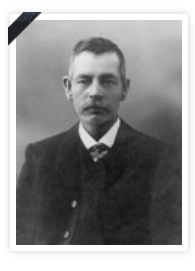
From the Subiaco Museum...


"Mrs Thomas In Red Cross Summer Uniform 1941 

The original black and white photograph shows Mrs E M Thomas in the Red Cross summer uniform. She is wearing a shirt and tie and is hatless. Mrs Thomas sits at a table holding an open book with her left hand, pen poised in the right hand.  

Handwritten on the back are the words: "To wish you a lucky year as come too late for birthday wishes, love Ma Thomas" (Subiaco Museum).  


Woman's History Month...2023. Post 16... Alexandra McKinnon Burns... Subiaco Business Woman (1938).

Woman's History Month...2023. Post 16... Alexandra McKinnon Burns... Subiaco Business Woman (1938).

This month is Women's History Month. I have decided to repost the stories of many of the wonderful women from Subiaco I have come across.

Alexandra McKinnon Burns... Subiaco Business Woman (1938).

During March International Women's Day was held. The Subiaco Museum created an exhibition to highlight the contribution of women to the Subiaco community. 

The women included Alexandra McKinnon Burns (1864 -1961), Dame Annie Florence Gillies Cardell-Oliver (1876 - 1965), Adelaide 'Queenie' Chugg (1898 - 1981), The Lipfert Sisters (Minna Maria Lipfert (1902 – 1959), Olga Gertrude Lipfert (1906 - 1989) and Thekla Elsa Lipfert (1912 - 1989) and Ethel Maude Thomas M.B.E (1881 - 1961). The exhibition contained a number of wonderful photographs and artefacts and are available on the webpage from the Subiaco Museum.

While there is a substantial amount of  information about the exceptional work and life of Dame Cardell-Oliver available on various sites on the Internet, Trove, the database of the National Library of Australia contains some wonderful information and photographs about the women mentioned by the Subiaco Museum in their exhibition. One of those women is Alexandra McKinnon Burns.  

Alexandra McKinnon Burns was born in 1864 in Spring Creek, Victoria. She married William Burns. After William established the Brown and Burns Bakery in Subiaco in partnership with Samuel Brown she followed him to Perth. Together they had four sons, Thomas, Ormond, Robert and Jack and a daughter Alexandra (Lexe). The family lived at 25 Catherine Street, Subiaco.  

In 1931, the Daily News newspaper published an article about how the Brown and Burns Bakery had become a quality bakery, not only in Subiaco but throughout Perth. The article discusses the products the bakery made and the methods used to make and deliver bread throughout the metropolitan area. The business employed 25 permanent employees. 

After William's death and Mr Samuel Brown entered Parliament, the partnership was dissolved. Alexandra purchased all interests in the business which she directed before including her sons and daughters in the partnership. She was the governing director until her death in 1938 (West Australian, 28 May 1938). 

In 1938 the West Australian published a detailed obituary following the death of Alexandra McKinnon Burns "...All her life Mrs. Burns was a strong adherent of the Presbyterian Church. She was devoted to her four sons and her daughter and to her grandchildren; endeared to her other relatives, of whom there are a considerable number in Western Australia and greatly appreciated by a very large circle of friends. 

In recent years Mrs. Burns made a world tour and also paid a visit to China and Japan. being accompanied on the first occasion by her daughter, now Mrs. van der Sluys of New Guinea. Mrs. Burns was also an ardent supporter and worker for the Y.A.L (Young Australia League...." (West Australian, 26 May 1938).

The articles and photographs are from Trove, the database at the National Library of Australia. No copyright infringement intended. 

The photograph of Alexandra McKinnon Burns is from the Museum of Subiaco webpage. No copyright infringement intended.


Daily News, 18 March 1931.

SUPREMACY IN BREAD-MAKING.

Bread, which has been man's first necessity throughout all the ages, has undergone changes at various times, but the basic conception remains . Bread presenting in this form the incomparable nutrition that is derived from the grain. After all the bread fads which have, come and gone in recent times it is refreshing to find that in Subiaco the old and reputable firm of Messrs. Brown and Burns Ltd., in Hay street, prefer to adhere to the original idea with the difference - that they are for ever seeking to improve upon the methods by which good, simple, plain bread is made. 

Not only in Subiaco but every part of Perth the mention of the name of Brown and Burns is synchronised to the picture of the perfect loaf. The firm dates its history back to 1897, when Subiaco would have provided excellent location if there had at that time been a motion picture company producing scenes in Sahara. The original members of the firm were the late Samuel Brown and William Burns. From the smallest kind of bakery the business has grown to the large and commodious premises in Hay-street, which are grown throughout the entire metropolitan area. From delivering the bread in a basket to the present splendid motor-van service pictured on this page some idea may be gained of the progress which has been made. 

Mr. T. A. Burns tells us that they have followed every development in breadmaking in recent years, but although they make fancy breads they believe that nothing is produced today that is superior to the Vienna loaf or rolls, in which they specialise. This is a highly riur tritive bread made of milk, butter and sugar, and is baked in a special oven known as a steam tube, made for the purpose. Among otter up-to-date devices used by the firm are two types of dough mixers, dividing and weighing machines and other forms of mechanism designed for, convenience, hygiene and greater efficiency in baking. 

The extent of the business of Messrs. Brown and Burns may be gauged by the fact that they bake about one million loaves of bread annually and that their custom extends all over, the metropolitan area. They have 25 permanent employes. Their products and Particularly their Vienna rolls are served in most of the tearooms in Perth. The firm are also famous for their Health and Veeda breads, which are unexcelled in food value. Messrs. Brown and Burns Ltd. Bakery.

West Australian, 26 May 1938.

The Late Mrs. A. McK. Burns. 

The funeral of the late Mrs. Alexandra McKinnon Burns. of 25 Catherine-street, Subi #aco. took place in the Presbyterian Cemetery, Karrakatta yesterday afternoon in the presence of a very large and representative gathering. 

The service at the graveside was conducted by the Rev. T. P. MeEvoy, of the Subiaco Presbyterian Church who during the course of an eloquent tribute to the life of the late Mrs. Burns, referred to her devotion and adherence to her principles. Mrs. Burns was the sixth daughter of Mr. and Mrs. LackIan McKinnon. who went from the Isle of Skye to Victoria in 1852. 

She was born at Spring Creek near Daylesford, and close to the famous Hepburn Spa, in 1864. After her marriage to Mr. William Burns in the late eighties she resided in Melbourne until she followed her husband to Perth in 1897, shortly after he had, in partnership with the late Mr. S. Mc. Brown. established the bakery establishment of Brown and Burns at Subiaco. 

Since then she resided in that suburb of Perth. Her husband predeceased her 34 years all but a day. After Mr. Brown had entered Parliament the partnership was dissolved. Mrs. Burns purchasing all interests in the business which she directed with considerable acumen for a long period before she took her sons and daughter into partnership. She remained governing director until her death, the management being in the hands of her eldest son. Mr. T. A. Burns, who, until recently, was president of the Master Bakers' Association of this State and, for a term, was Australasian President of the master bakers' organisatlons. 

All her life Mrs. Burns was a strong adherent of the Presbyterian Church. She was devoted to her four sons and her daughter and to her grandchildren; endeared to her other relatives, of whom there are a considerable number in Western Australia and greatly appreclated by a very large circle of friends. 

In recent years Mrs. Burns made a world tour and also paid a visit to China and Japan. being accompanied on the first occasion by her daughter, now Mrs. van der Sluys of New Guinea. Mrs. Burns was also an ardent supporter and worker for the Y.A.L. 

The chief mourners were Messrs. T. A.. O. A., R. W. and J. H. Burns (sons). Mrs. J. van der Slurs (daughter). Mrs. M. Roe (sister), Mr. J. Burns (brother-in-law)....


Thursday, 16 March 2023

Woman's History Month....2023. Post 15... Chesters, Sith "Wood Lady of Subiaco".

Woman's History Month...2023. Post 15...Chesters, Sith "Wood Lady of Subiaco".

This month is Women's History Month. I have decided to repost the stories of many of the wonderful women from Subiaco I have come across.

Chesters, Sith "Wood Lady of Subiaco".

Born c1865 Greater London, England and died 18 August, 1954 (aged 88-89) Nedlands, Nedlands City, Western Australia.

Sith Annie Chesters (c1865 - 1954) "Wood Lady of Subiaco" and James Chesters (c1864-1929) was a builder and Mayor of Subiaco.

The Chesters' grave is on the Karrakatta Historical Walk Trail One. This description about Sith Chesters is from the website at www.mcb.wa.gov.au

"...James Chesters' wife Sith Chesters was always elegant and attired, usually donning large picture hats and white gloves. James Chesters, whilst a moderately affluent man, was very careful with his money. The Chesters had no children, and when James died in 1929, Mrs Chesters gradually withdrew from society, firstly selling their home and moving to a small house on the edge of King's Park and living, it seems, only on what she had before her husband died.

She lived with the utmost stringency but was generous to charitable causes. She was known simply as the "Wood Lady of Subiaco." Then she became a familiar figure pushing her old pram along Thomas Street collecting wood and bottles. She was also referred to as the "Birds Nest Lady", a reflection on her hairstyle.

Over the years she became increasingly antisocial and fought a bitter and unsuccessful battle against a road going through her property. Sith Chesters made a unique effort to the War during World War 11. In August 1940 she bought two Spitfire planes at the cost of 85000 pounds each to be kept in Britain and used in the Battle of Britain, and a training plane costing 1750 pounds for Australian pilots to train in. She lived into her 80's and suddenly people realised she wasn't around anymore. Sith Chesters was one of the unusual characters and eccentrics of Perth. When she died she left many charitable bequests including funding for medical scholarships at the University of Western Australia. '

Death notices about Sith Chesters published in various newspapers reported she left a lot money which was divided among various living relatives as she had no children and many charities. These notices can be found at National Library of Australia database Trove.


Stories From The Perth Children's Hospital (1930 - 1950).

Stories From The Perth Children's Hospital (1930 - 1950). The Perth Children's Hospital was built in 1909 on the corner of Hay and T...