Friday, 29 January 2021

Kathleen Morrisby...A School At The Children's Hospital At Subiaco (1944).

Kathleen Morrisby...A School At The Children's Hospital At Subiaco (1944).

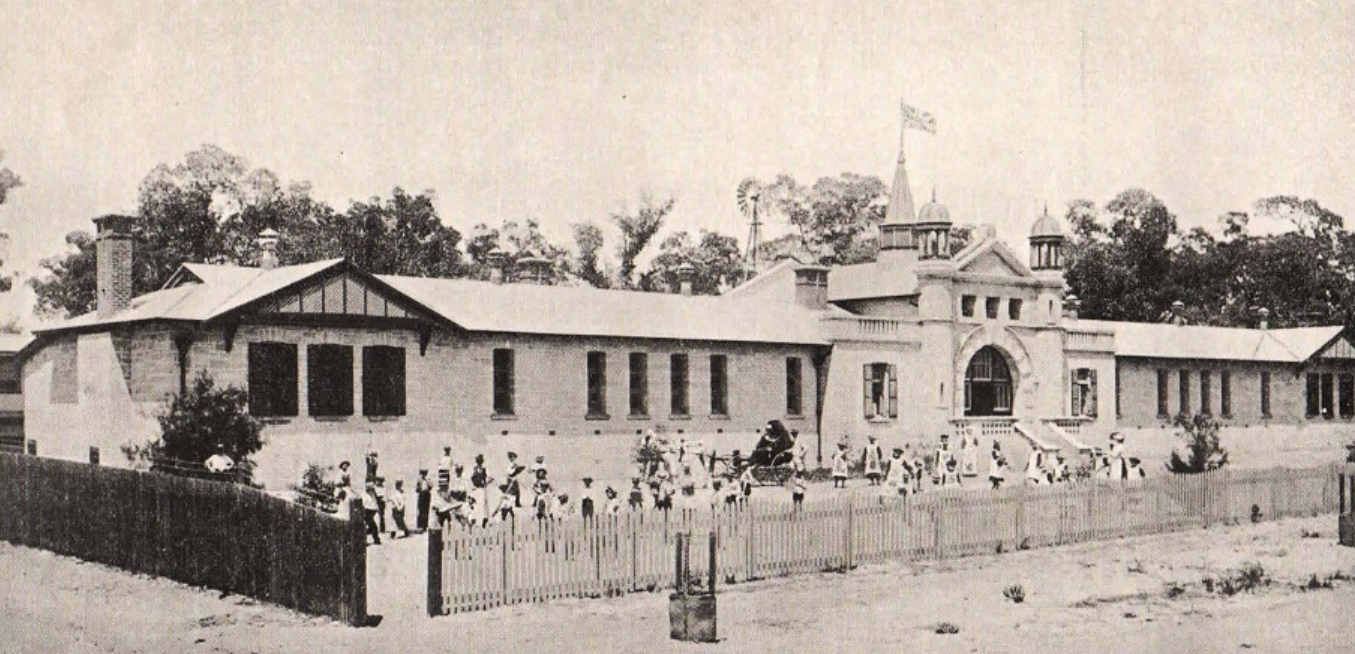
Kathleen Morrisby was a teacher in the Education Department who set up a school in the Children's Hospital in Subiaco in the orthopedic ward to help young patients remain in touch with their studies while they under went treatment. She was born in Roebourne in 1906.  

During the summer break of the school in 1944 Kathleen travelled to Melbourne and visited several hospitals to learn about teaching children in orthopedic wards at her own expense. In 1949 Kathleen travelled to England and Europe to study their methods used to educate children with a range of disabilities which were used to assist the children at the Children's Hospital upon her return. 

In 1951 Kathleen obtained a position as principle of Larchfield House in England which was a home for disabled children set up on the Earl of Harewood's estate near Harrogate. During her time there she leant some of the newest methods for the diagnosis and treatment for children with disabilities.  

The West Australian reported about Kathleen's study and work... "Two years ago she went to England to study the latest methods of teaching all types of handicapped children. There were about 80 girls at Palingswick House School, she said, their ages ranging from eight to 16 years. The teaching was remedial, and only 18 girls were in any one class. In addition to ordinary lessons, according to their ability, they had art therapy, pottery, sewing, woodwork, dramatics, speech therapy, domestic science and sewing. Excellent results had been achieved..."(West Australian, 27 June 1951). 

Throughout her life Kathleen was interested in the Girl Guides movement in Western Australia. She established branches and participated in committees and encouraged young girls to become involved.  After Kathleen returned from England and Europe she took on the role of Commissioner for Extension Guiding and set up a play therapy unit for girls at the Claremont Mental Hospital.

The first article titled 'School in a Hospital' Sunday Times, 9 July, 1944 is about Kathleen Morrisby and her work in educating children at the Children's Hospital in Subiaco. Together the children with Kathleen as their teacher achieved some amazing results.

The second article titled 'British Work in Educating Handicapped Children' from The West Australian, 8 August 1950 is about the observations Kathleen made during her study tour and work in England and Europe. She gave considerable praise to the work already being done by professionals for children at the Children's Hospital.

The achievements and work of the children at the Children's Hospital are continued in the next post.   

After Kathleen returned to Perth in 1955, she was appointed Principal of Minballup Occupational Centre and, from 1962, the Specialist Section of South Kensington Occupational Centre until retiring in 1970. She died in December 1990, aged 84.

The articles and photographs are from Trove, the database of the National Library of Australia. No copyright infringement intended. 


Sunday Times, 9 July 1944.

SCHOOL IN A HOSPITAL

Facilities For Sick Children

Since the beginning of the school year, little patients at the Children's Hospital at Subiaco have been having regular school lessons under the supervision of Miss Kathleen Morrisby.

The scheme, which is under the control of the Education Department, enables kiddies to keep in touch with their school work, so that when they return after long absences they can more easily take up the threads of their studies.

Small patients range from three years old to a pupil is up to 5th standard work. Most of them are in the orthopedic ward, and there are others who are accident cases, or in for treatment for heart or diabetes.

Studies are naturally suited to the capability of the small patients, according to their improvement in health. Besides helping their education the scheme is one which, give them plenty of interesting occupation.

Miss Morrisby said that the three-year-old are most anxious to join in, and demand their paper and crayons when the others are being attended for lessons.

Excellent Standard

The standard of work is very good, some of them, who are In higher grades, possessing wonder fully neat work with lessons which have been well done.

Drawing is the delight of the tiniest, and rabbits and squirrels in startling colors adorn the papers which are given out for the morning's work. Sewing and hand work are also included  in the curriculum.

There are several natives among the cases, and these small boys and girls display keen interest and ability, one little lad in particular, showing quite a talent for drawing.

"It ls the most interesting work." said Miss Morrisey. "I love it. Of course there ls plenty of preparation to be done for the lessons, and one has to see that the work is suitable for the precarious health of the children. They are all very keen, and we get on splendidly."

Classroom Soon

Soon there will be a classroom built for the use of pupils who are well enough to be housed there for lessons, and later on there will be sand-pits and other kindergarten facilities.

Miss Morrisby has plenty of equipment to carry on, and makes quite a number of things requited for the lessons.

Besides being of help and occupational Interest to the sick kiddies, the parents are delighted to think that their little ones are able to keep in touch with school work in such a pleasant way, and feel they will not be so hackward when they take their place again In the regular school.


West Australian, 8 August 1950.

British Work In Educating Handicapped Children 

Special attention was being paid in Britain to the education of physically and mentally handicapped children and remarkable results were being achieved, said Miss Kathleen Morrisby alter her return to Perth last week from England, where she had spent 18 months.

Miss Morrisby, who started the school for orthopaedic patients at the Princess Margaret Hospital, the first of its kind in Australia, went to England to study the latest methods of educating children who were handicapped. 

She has brought back much valuable information gained at first hand. Her visit was welcomed by the London County Council, whose education officer made it possible for her to visit many schools and she worked in some of them. In the area controlled by the L.C.C. there were 83 special schools for all types of handicapped children and the director of the section which controlled them was a woman chosen for her wide experience and knowledge of the particular problems which were met in these special schools, Miss Morrisby said. 

Great progress had been made in educating blind children, and at one school she saw children aged between five and ten years running about and playing as though unconscious of their disability. Their school work was excellent. Children with partial vision were educated separately and by means of special lenses attached to the desk the child was able to use ordinary text books. Miss Morrisby has made inquiries to see whether these lenses can be imported if they can be made use of in Australia. 

SIZE OF CLASSES. Other special schools catered for orthopedic cases in hospital, and for convalescent orthopedics, Miss Morrisby said. One hospital with 800 patients employed 49 teachers, but she saw no hospital school which was so well equipped as that at the Princess Margaret Hospital. 

Children who suffered from a double defect, the mentally handicapped, the maladjusted, and children who had been through the courts for delinquency were all educated in separate schools, and in no case did the number of pupils in a class exceed 15. This made it possible for the teacher to give better attention to each child. 

Miss Morrisby worked for a time at a residential school for girls, all of whom had been through a court for delinquency, and children such as these. she said, were England's greatest educational problem. Deaf and dumb children were equipped with hearing aids, but she saw nothing better in these schools than what was being done at the school for deaf and dumb children in this State. 

LOCAL DESKS ADOPTED. Open-air schools for tubercular contacts had been established in different parts of England and there were hospital schools for heart cases. One of these proposes to copy the type of desks used at the Princess Margaret Hospital and the recumbent spectacles already being used in this State have been introduced to Guy's Hospital and some children's hospitals as a result of her visit. 

During her time in England Miss Morrisby was able to have discussions with leading educationists and psychologists. She later visited Holland, France and Switzerland, combining a holiday trip with visits schools in those countries.


From Celebrating 100 Years PLC OCA by Presbyterian Ladies College

https://issuu.com/presbyterianladiescollege/docs/100_years_booklet_single_pages/s/11343637

Kathleen Edith Mary Morrisby (1923)

1922-1923; Deputy Prefect

Born in Roebourne in 1906, Kathleen grew up in Geraldton where her sisters, Elinor Morrisby (1926) and Isabel Lee (Morrisby 1929), were born. She came to PLC in 1922-1923, after which she worked as a monitor at her old school, Geraldton High, and captained the 1st Geraldton Guide Company. She then attended Claremont’s Teachers’ Training College, with her first posting as Head Teacher at Kulikup State School, in Yallingup, in 1928. From 1929-1930 Kathleen was the OCA’s Geraldton Branch Secretary and, in 1937-1938, OCA President. The next year she became the first female appointed to PLC Council as the inaugural OCA Representative to Council. She served until 1952, and was OCA President again from 1942-1945.

In 1944 she led a new scheme, educating orthopedic patients, aged 3-15, in the Children’s Hospital. She visited interstate specialists to study their methods and, from 1948, embarked on a tour of England and Europe, learning new techniques in the education of tubercular, blind, deaf and mute children. Finding Western Australia led the way in some methods, she brought others back when she returned in August 1950. She then rejoined the OCA committee and, as Girl Guide Commissioner for Extension Guiding, set up a play therapy unit for girls at the Claremont Mental Hospital.

In 1951 Kathleen was appointed Deputy Principal of Palingswick House School in London, for 80 “educationally subnormal” girls aged 8-16, but was soon the Principal of Larchfield House, a home and school for children with cerebral palsy, near Harrogate.

Returning to Perth in 1955, Kathleen was appointed Principal of Minballup Occupational Centre and, from 1962, the Specialist Section of South Kensington Occupational Centre until retiring in 1970. She and her sister Elinor then moved into different apartments in the same complex in Nedlands, where she died in December 1990, aged 84.


Western Australia Is Proud Of These Women... (1945).

Western Australia Is Proud Of These Women...(1945).

There have many women who have made extraordinary contributions to Western Australia and Australia. Many of those stories have been told through the newspapers of the time and can be found on Trove, the database of the National Library of Australia. 

One of those articles titled 'Western Australia Is  Proud Of These Women' was published in the Daily News in 1945. The article provides an extensive list including some women who were awarded for their contributions made in public life, for example Senator Tangney, the first woman senator and First Officer S. McClemans, Lt. Col. E. V. Kenny and Captain M. Brown who had made extraordinary contributions during the recent World War 2.. Kathleen Morrisby, a teacher in the Education Department who set up a school in the Children's Hospital in Subiaco at her own expense was also mentioned.    

The article also recognises the quiet achievements of women day in and day out..."there have many who marched, the many hundreds of women who have, silently and unsung, devoted days in every week of the year to the different patriotic organisations. To them, the knowledge that their work has given amenities and comforts to service men and women has been, sufficient acknowledgment of their labours."

The article and photographs are from Trove, the database at the National Library of Australia. No copyright infringement intended. 


Daily News, 8 January 1945.

Western Australia Is Proud Of These Women. 

MRS JOHN CURTIN

SENATOR TANGNEY

MISS K. MORRISBY

FIRST OFFICER S. McCLEMANS

LT.-COL. E. V. KENNY

CAPTAIN M. BROWN

To W.A. women young and old, in civil and service life, 1944 brought honour and distinction for attainments in many walks of life. Some were singled out for decorations for bravery, others to take over high positions to replace men who are serving in the front lines. 

Never before have they come so to the fore in the public eye, have they been more deserving of the reputation they have gained for a high standard of efficiency and self sacrifice. Senator Dorothy Tangney set the ball rolling for West Australian fame when early last year, as the first Australian woman senator, she took her place on the Parliamentary Committee on Social Security, the first woman to sit on any Federal committee. 

Mrs John Curtin was the first Prime Minister's wife to be appointed president of the Western Australian Labour Women's Organisation. 

First officer, Sheilah McClemans became Director of the Women's Royal Australian Naval Service, the first West Australian woman to be appointed head of a women's service. 

AWAS Signalwoman Pat Selby, of Waterman's Bay, was the only servicewoman to have even been awarded the Commander-in-Chief's card for bravery and devotion to duty. 

To Lt. Colonel E. V. Kenny of Mt. Lawley, awarded the Royal Red Cross, highest military award for a woman and to Captain Mary Aitken Brown of Peppermint Grove the M.B.E. (Member of the Military Division of the British Empire). 

Youthful W.A. University graduate, Sheila Rowley, was given a grant by the Postwar Rehabilitation Department for research into farming conditions and possibilities in the Avon Valley. 

Mrs Ivy Kent was the first West Australian woman to become a member of the Australian Broadcasting Commission. 

Teacher Miss Kathleen Morrisby of the Education Department, opened the first school for orthopaedic patients in the Children's Hospital, Subiaco, will, at her own expense, study methods of teaching used in Eastern States hospitals. 

Friend and helper of the maimed and limbless soldiers, Miss Mary Meares, M.B.E., left military work here to take up an appointment with the British Y.W.C.A. in the SouthEast Asia Command, is now stationed in Colombo. 

Dr Merab Harris and Miss H. King were the first women elected to Guildford Council.

Twenty-two-year-old Joan Parker, of Nedlands was the only woman at the W.A. University to pass the final Bachelor of Agriculture degree examinations last year. 

Red Cross worker, Miss Nora Parker who served for 12 months overseas with the Field Force, has, since her return, been appointed to the hospital visiting staff of Hollywood Military Hospital. 

Fifteen-year-old Betty Brazier, who, at the age of two, was badly burnt when her celluloid doll caught fire, has since had eight operations, has, through her courage and fortitude, been discharged from a Melbourne hospital and has returned to Perth with the ambition to become a nurse. 

Mrs Leslie Craig, five-year State president of the Country Women's Association, who has been an outstanding leader of her association over that time, retired from office, was made a life member. 

Hostels throughout the State, hundreds of members of the Country Women's Association provided hostels at Geraldton and Albany for high school students who would not otherwise have been able to attend high school. 

Besides those whose merits have been publicly recognised, the many who wear chevrons and satrs of war service, there have marched, the many hundreds of women who have, silently and unsung, devoted days in every week of the year to the different patriotic organisations. 

To them, the knowledge that their work has given amenities and comforts to service men and women has been, sufficient acknowledgment of their labours. 

And so we salute them, the women who have achieved great things, have followed in the footsteps of their pioneer forefathers.


Saturday, 23 January 2021

The Story Of Children And A Bomb In Subiaco (1939).

The Story Of Children And A Bomb In Subiaco (1939).

There are some wonderful stories about children and their adventures in the early years of Subiaco in Western Australian newspapers. 

This is the story of children playing with a bomb they found in the backyard off a house in Townshend Road, Subiaco which could have had dangerous consequences. The story was picked up by many newspapers around Australia. 

The articles are from Trove, the database of the National Library of Australia. No copyright infringement intended. 


Daily News (Perth, WA : 1882 - 1950), Wednesday 2 August 1939, page 22

Believed to be still alive, a wartime Mills bomb was discovered being used as a plaything by children at a Subiaco home yesterday. When an ex-soldier plumber saw the bomb, he notified the police, and the bomb was eventually handed to the military authorities. Careful examination today, however, revealed that the bomb had 'had its teeth drawn' and was quite harmless.

Military experts who examined it found that it contained no explosives. The base had been screwed out and the detonator cap, and fuse removed, apparently before the souvenir was brought b,ack to Australia from the Great War. It was learned also that the bomb had been taken to pieces by a civilian several years ago, found empty and assembled again. Yesterday the bomb was found in  the garden of a home in Townshendroad, Subiaco. 

Children had played with it at various times over a period of years. Believing that the bomb was live because the safety-pin was still in it, officials were amazed that no one had been hurt. The bomb, which had been used repeatedly by children as a toy, was on the property of Mrs. J. Armstrong, widow of a returned soldier who died 12. years ago. 

It was found yesterday by a Mr. Hollyoak. a returned soldier plumber who had called at the house. Believing it to be alive, he buried it and reported the matter as a safety precaution to the Subiaco police. Two constables visited the house and took possession of the bomb. Later it was taken to Military Headquarters. The bomb was old and coated with rust and the safety-pin had been corroded to its head with rust.


Kalgoorlie Miner, 2 August 1939.

MILLS BOMB FOR TOY

CHANCE DISCOVERY IN SUBIACO CHILDREN HANDLED IT FOR YEARS.

A chance discovery at a house in Subiaco today disclosed the astonishing story of how children had played for several years with a live Mills bomb, without knowing the death dealing power of their 'toy.' 

Called to effect repairs to a house in Townshend road, a plumber named Hollyoak, who is a returned soldier, saw the bomb lying in the garden. After burying it, he reported the matter, as a safety precaution, to the Subiaco police and Constables Reynolds and Calvin went to the house, where they took possession, of the bomb as the ring was in position on the top of the bomb, Mr. Hollyoak said he was convinced it was a live bomb. 

A Mrs. Armstrong, who occupied the premises, explained that her husband, who had been a member of the A.I.F., died about 12 years ago. She did not know that the bomb was a live one and the children had played with it at various times over a period of several years. In response to a telephone message from Sergeant Gorst to the military station authorities, Corporal S. Middleton, of the A.A.S.C., called at the police station, and confirmed the belief that the bomb was a live one.


Friday, 22 January 2021

Subiaco Lady's Wish Ashes & Savings Go To Dogs Home (1953).

Subiaco Lady's Wish Ashes & Savings Go To Dogs Home (1953).

This is the story of a headmistress from Subiaco leaving her ashes and savings to the Shenton Park Dogs' Refuge Home in 1953. The woman wished to remain anonymous. 

The photograph is from a story about an Irish Terrier reported to have had over 60 puppies that the Shenton Park Dog's Refuge helped home in 1949.

The articles and photographs of are from Trove, the database of the National Library of Australia. No copyright infringement intended. 


Sunday Times, 5 April 1953.

Subiaco Lady's Wish Ashes & Savings Go To Dogs Home

An unmarried Subiaco woman died in Mount Hospital at 65, leaving a strange will requested that her ashes be scattered at the Dogs' Refuge Home, Shenton Park. In addition her savings, a substantial amount, were left to the home and will be used for general upkeep and improvement.

The woman whose name is withheld as it was , her dying wish that she remain anonymous was for the major part of her life attached to the Education Dept as a headmistress.

With a deep and abiding love for all children and animals, she supported a number of pet cats and dogs who were her sole companions in her home. All of them preceded her in death.

A friend the executor of her will said yesterday: "Animals were her most beloved. She had a deep affection for all dumb creatures and it is typical of her that she should leave her appreciable savings exclusively to them."

"Not so long ago she had 4 dogs but at her death none of her animal companions were living."

Her savings will greatly assist the Dog's Refuge Home which cares for more than 150 unwanted or unattended animals. It will come at a time when the home is experiencing difficulty coping with increasing living costs and expense of general upkeep and is inviting all forms of support.

President of the Home Edwin Harvey yesterday expressed gratitude towards the generous gesture of the dead lady.

"A Godsend"

"It's simply a Godsend to the Home," he said.

A jacaranda tree will be placed in the yard of the Home and it will be in this area that the donor's ashes will be scattered. Referring to the general nature of public supp.ort, Mr. Harvey said that while such elaborate contributions were not common the degree of intensity of the love of people for their pets was much stronger than the general public realised.

One man was at present engaged in the construction of an elaborate statue of his caninè pal for placing on his grave at the Dog's Cemetery adjoining the Home. Dozens of dogs graves at the Home some of them elaborate and of marble carry touching inscriptions and are regularly visited by their owners who bring flowers Sunday afternoons just like at any other cemetery.

Authorities feel that the Dogs' Cemetery resting place of many a devoted pal and on which large sums have been expended, is threatened by a recent Government action.

Reduce Lease

Government recently made a move towards substantially reducing the lease period and the area involved.

Authorities are alarmed that this action may lead to the necessity of clearing the cemetery.

When devoted animal lovers such as the anonymous lady in the accompanying story so touchingly express their opinion of the value of the Home and its work Depts. should not feel disposed to interfere unnecessarily with such a service.

All pet lovers will agree on this point.

Stray dogs at the Home need care and attention and autherities invite those with occasional or regular spare time to help tend the dogs by grooming, exercising or feeding. 

Visitors are always welcome.


Daily News, 16 December 1949.

AN IRISH terrier mother whose 14 pups arrived at the Shenton Park Dogs' & Refuge Home last weekend has brought her total number of pups in five years to about 60. The pups, shown above scrambling from their box, are now about eight weeks old and are all in good condition.

The pups' mother was not brought to the home, but is unmistakably of Irish blood. Still, a search for the other side of the pups' family tree might lead to international complications.

About a year go, 12 pups from the same mother were taken to the home. There are strong indications that all the latest litter will be speedily adopted — as Christmas presents for children.


Matron Ettie Gill... Children's Hospital, Subiaco (1929).

Matron Ettie Gill...Children's Hospital, Subiaco (1929).

There are many articles on Trove, the database of the National Library of Australia about women who dedicated their lives to the nursing profession in Western Australia. 

This post is about one of those women, Ettie Gill who was matron at the Children's Hospital in Subiaco and the Perth Hospital for many years. She helped trained nurses who went to World War One. She died suddenly of heart failure in 1929.

The articles and photograph are copied below from Trove, the database of the National Library of Australia. No copyright infringement intended.  


Daily News, 10 August 1929, 

SUDDEN DEATH TODAY

Children's Hospital Matron

Miss E. Gill, matron of the Children's Hospital, was found dead in her room at the hospital this morning. Miss Gill had occupied the position of matron since February, and prior to that for ten years was matron of the Perth Hospital. She took a prominent part in the Australian Trained Nurses' Association. Miss Gill was on duty this morning, and was found in her room at 11.30 o'clock. If is understood that heart failure was the cause of the matron's death.


West Australian, 23 August 1929.

THE LATE MISS GILL.

A Life of Service.

The sudden death of Miss Ettie Gill, matron of the Children's Hospital, Perth, and late matron of the Perth Hospital, is deeply regretted by members of the medical and nursing professions in Western Australia and in the Eastern States for her gracious disposition, high principles, devotion to duty and earnest endeavour to set a high standard for those she trained to follow. 

Miss Gill was beloved and admired by all privileged to know her. She will be missed far and wide. Nurses trained by her during; her long term of office as matron of the Perth Hospital, now scattered in all countries of the world, have kept continually in touch with her. 

The frequent receipt of interesting and appreciative letters from these nurses was a source of much pleasure to Miss Gill. The high place in which Perth Hospital trained nurses are held in medical circles, both throughout the Commonwealth and in England, is due mainly to her thorough and able instruction. 

Miss Gill's credentials and administrative ability were such as to fit her for the highest hospital positions in the world she preferred, however, to remain in Perth to be near her sister, Mrs. Young, of Claremont. During the war, with a greatly reduced staff, Miss Gill speeded up training and sent large numbers of thoroughly qualified nurses to the front. 

Under, her management the Perth Hospital largely increased its sphere of usefulness and added to its branch at West Subiaco for infectious cases, the Kalamunda Convalescent Hospital, and an additional ward for returned soldiers. Miss Gill's cheery and bright personality inspired and comforted those with whom she worked. Her life ended with tragic abruptness.


Father Christmas arrives at the Children's Hospital in Subiaco in 1929.

Daily News, 11 December 1929. 


Subiaco Domestic Science Centre (1935).

Subiaco Domestic Science Centre (1935).

An interesting article about the training of women teachers in domestic science at the Subiaco Domestic Science Centre in 1935. The women were qualified teachers and expected to teach 'housewifery' in schools and in particular country schools after graduating from the course.

Three years earlier in January 1932, there was another interesting article published in the West Australian about the inclusion of domestic science in the Western Australian school curriculum. The teaching of domestic science subjects where once taught to prepare women for their role in the home and as domestic help were now used boost student's opportunities for gaining employment.     

The course at the Subiaco Domestic Science Centre was run by Miss E. Butler. This is the first on three posts about the achievements of unmarried women living and working in Subiaco. The next two posts are about unmarried women living and working in Subiaco, the matron of the Children's Hospital in Subiaco who died in 1929 and the following post is about a headmistress from Subiaco who when she died donated her savings to the Shenton Park Dog's Home.  

The articles and photograph is from Trove, the database at the National Library of Australia. No copyright infringement intended. 


West Australian, 12 December 1935.

SKILL IN HOUSEWIFERY. Students Exhibition at Subiaco.

METICULOUS skill in method and execution was shown in the work displayed by the women student teachers at the Subiaco Domestic Science Centre yesterday. Under the senior domestic science instructor, Miss E. Butler, the students have completed a special six months' course and after Christmas will teach a certain amount of housewifery at different country schools.

During the course the teachers have gathered a thorough practical knowledge of cookery, laundering, handicrafts, upholstery and needlework. The exhibition was opened by the Director of Education (Mr. J. A. Klein), who congratulated Miss Butler and the students on the excellent work done. Mesdames Klein, M. P. Troy, P. J. Wise and L. Mason and Miss M. Tewers (Organiser and Inspectress of Household Management for the Education Department) were present. 

The upholstery was perhaps the outstanding section, the articles made by the girls also being an important lesson in economy. It was hard to believe that the attractive seats, bedroom boxes and glory-boxes upholstered in brightly coloured chintzes and shadow tissues were made from oblong and square butter boxes, while the roomy, well-sprung armchairs showed no trace of their humble origin. Wallpaper was used with good effect to transform sweet tins into wastepaper baskets. Hatstands and cushions were other articles in this section. 

The home-made jams, with their cellophane covers and neat labels, maintained a high standard. Including Cape gooseberry, various marmalades, grapefruit, strawberry and lemon, the jams looked clear and appetising. Set out neatly on a long table the cakes, biscuits, Cornish pasties, tarts, fish cakes and savouries were cooked for examination purposes. The Christmas cakes were artistically decorated, but one cake was not iced to show the richness of the mixture. 

With the shining whiteness that only careful washing and starching can give, the laundry work was praiseworthy. The exhibition also included cupboards made from boxes, and books containing examples of all types of mending, sewing and. embroidery.


Sunday Times, 15 December 1935.

IN CONNECTION with the Teachers' Domestic Science Course, a fine display of work was held at the Subiaco centre last Wednesday afternoon. The teachers attending this course are all certified teachers, and the course was to prepare them for teaching domestic science in country schools.

The course includes cookery, laundry, housewifery, home upholstery, and home-making as re-gards furnishings, etc. The display was a splendid one. and the teachers, equipped with such a comprehensive knowledge of the working of the home, will be able to render excellent service in the country. The course was held under the direction of Miss E. Butler, senior domestic science instructress of the Education Department, in association with Miss M. E. Tewers, inspectress and organiser for domestic science in the department.


West Australian, 6 January 1932.

DOMESTIC SCIENCE.

INSTRUCTION IN SCHOOLS. The Field for Development.

Seventeen years ago, Miss M. A. Wylie became organiser and inspector of domestic science for the Education Department. There were then 16 centres at which this subject was taught. A few days ago Miss Wylie severed her connection with the work and her successor this year will have the oversight of 33 centres, of which 22 are full-time and the remainder part-time. 

Miss Wylie told an interviewer that domestic science was an extremely popular subject with the girls. In the part-time centres, she explained, an assistant teacher of domestic science was attached to the ordinary school. In the full-time centres a fully-qualified instructress was in charge. All teachers, both part-time and full-time, in addition to possessing domestic science certificates, held the ordinary teacher's certificate. 

A full-time centre had a number of contributory schools, which sent girls for instruction from the 6th, 7th, 8th and sometimes 9th standard. At Perth Modern School, however, the domestic science department was part of the school and no outside classes attended for instruction. In the Perth Central and Fremantle Central divisions there were respectively five and four centres. Other centres in the metropolitan area were established at East Perth, Subiaco, Leederville, Midland Junction and Claremont. In the country there were full-time centres at Bunbury, Collie, Albany, Northam, Kalgoorlie, Kalgoorlie High School and Geraldon, and part-time centres at Wagin, Katanning, Pingelly, Beverley, York, Narrogin, Toodyay, Kellerberrin, Moora, Pinjarra and Harvey. 

Each full-time centre took on an average 220 girls per teacher each week and each part-time centre took 20 to 40 girls, the total enrolment for the State being about 5,500. Girls attending schools classified below Grade IV. did not receive instruction, proceeded Miss Wylie. These were mostly small schools in country districts, and the position was due principally to lack of funds to provide equipment and arrange for household management assistants. 

One step towards the solution of this difficulty would be the fitting and equipping of a railway coach as a travelling domestic science school. Success had attended schools of instruction conducted on these lines in Queensland and Victoria, giving girls in outback districts some of the advantages enjoyed by those in the towns.

Increasing Popularity. 

Domestic science has become much more popular with the passing of the years, she went on. 'We have now have a more comprehensive syllabus than formerly and, judging from the letters received from parents, the work being done is greatly appreciated". In 1928 the Public Examinations Board approved of domestic science as a subject for the Junior examination. 

The subjects taught consist of cookery, laundry work, housewifery, home nursing hygiene, dressmaking, millinery and home-making, the last mentioned including upholstering. Lectures have also been given for a number of years in connection with the Rural Domestic Science Course held each year by the Agricultural Department, in conjunction with the University.

While development has taken place, however. Miss Wylie said that there remained much to be accomplished to bring the work into line with recognised systems of domestic science teaching in other parts of the world. One of her desires, which the absence of funds rendered extremely improbable of fulfilment for some years, unless some public-spirited individual sponsored the scheme, was to see established a training college for teachers, of this subject. 

At present, training of domestic science teachers was carried out either by means of a monitorship or by a special six months course of instruction to qualified teachers. These special courses were held only occasionally, when a shortage of instructresses was pending. At the end of such a course the teachers were qualified for appointment as part-time household management assistants. 

Eventually they qualified for higher positions by taking further examinations in higher grade work. 

Scope For Improvement. 

"For a young country such as this," declared Miss Wylie, "the system has its advantages, but the time in the not far distant when there will be a greater demand for a more continuous supply of domestic science teachers and a college will be found necessary." 

In England, New South Wales and Victoria, where domestic science colleges are established, teachers may complete a full training in two or three years and classifications and status of an instructress largely depend on her time of service. Miss Wylie went on to say that she would like to see established also, in the near future, a domestic arts college where girls, on leaving school, might qualify along vocational lines, instead of dropping some of the most important domestic subjects taught at the domestic science centres. 

Many of these subjects had monetary value in the commercial world and would afford more avenues for the employment of girls. Such a college should be residential so that the girls might live in it for periods of from three to six months and be given not only further training in the subjects now taught but, in addition, facilities for obtaining instruction in horticulture, vegetable gardening, bee farming, poultry keeping, jam making and fruit preserving, as well as many of the arts and crafts for which women were specially adapted. 

Such a college could award diplomas which would give the holders a standing in the community as domestic science workers. The tendency to deprecate the position of a domestic servant lad greatly diminished in recent, years, but there was still a certain amount of prejudice to be overcome and the establishment of a domestic arts college would materially assist in dispelling that prejudice. 


Sunday, 17 January 2021

The Story Of Rose...The Subiaco Industrial Institution (1912). Part Three.

The Story Of Rose...The Subiaco Industrial Institution (1912). Part Three.

This is the story of Rose, a young girl placed in the Subiaco Industrial Institution because her father worked and was unable to care for her, and another girl who spoke up about the abuse  to the father. The father then shared his concerns with a newspaper who then sent a representative to investigate reports.  

This is the second time allegations of abuse at the Subiaco Industrial Institution were found. There were previous allegations found from an article in the Sunday Times in 1905. The stories of children being abused in institutionalised care in the early 1900's are extremely difficult to read and write. These young girls are to be admired for speaking out about the abuse of the government industrial schools of the day.     

The article is from Trove, the national database of the National Library of Australia. No copyright infringement intended. 

Truth, September 1912.

Industrial Schools

ASTOUNDING ALLEGATIONS. 

Children Complain of Cruelty. The Lonely Little Rose - "Knocked Down and Kicked" - "Always Being Belted" - "Assistants Cruel" - "Letters Burnt" - A Father's Appeal to "Truth" - Result of our Investigations.

During the week the following letters came to hand, and immediately on receipt of the communications, we dispatched a representative of this journal to thoroughly investigate the matter. 

(To  the Editor, "Truth") 

Dear Sir - Being a constant reader of this paper for some years, I am well aware, of the great good you have wrought, and I believe, the time has come when still more good will be done. I send you a copy of a letter got from a little girl that just come out of the Subiaco Industrial School; she wrote on behalf of my little girl who was there, to the effect that she was to be sent to the Church of England Home for Girls she was not getting her proper schooling in Kalgoorlie. I was away from home working, and could not take care of her as far as schooling was concerned, and it was arranged she was to go to the Home as stated, but, somehow, she was not sent there at all. Since that girl that wrote the letter was there, I hear that my little daughter has been taken out by another lady residing in Maylands, and I may say I am rather pleased, if such is the truth, as the little one writes me and she is very nice and kind. 

If there are any more particulars you require, you will find me at the following address— W. GILLIAM 

Ginglet, Aug. 29. 

P.S. Enclosed you will find exact copy of the letter in my possession.

THE LITTLE GIRL'S LETTER 

Dear Sir—I am writing to you for your daughter, who is at the Subiaco Industrial School; she asked we when I was in there four weeks ago, to write to you for her as they read all the letters. I was very sorry for her as she was my only friend. It is a shame for anyone, as they are always belting you, and you are working from morning till night, and they only give the children two hours a day for schooling, and, also, every morning, her and l and a couple of other girls had to clean all the children. They don't give half enough food. Rose would write and tell you everything, only the matron reads all the letters before they go out, and if you tell anything they have cur letter, and it is burnt. 

The matron is very kind, but the assistants are very cruel, they knock you down and kick you, if you are seen idle for one minute, they call you into the laundry to turn the big mangle, while sometimes you are sent to bed. Well there are scores of but I cant think of them all , I was in there for two weeks, am very glad to be out of this filth and misery, and I will be very glad when I see Rose out too. She is always crying for her father and sister and brothers. There is another girl who has just come out of the home and is going to write to you, also, to try and get you to go down and take Rose out. Well, I will say good-bye from Rosie little friend. 

P.S.- Rosie is always fretting, so do go down and get her out. 

Our representative writes as follows: - This institution, which was established as far back as 1894 comes after the control of the State Children's Department, and it is now officially designated as a receiving depot children are sent there by the magistrate of any Children's Court, and children whose parents are destitute, or who are left neglected in the world are received, upon the recommendation of Under-secretary Northmore. The department has male and female inspectors ever touring around on the look-out for neglected children, and no bona fide case is refused admission. After a time, the children are transferred to other branches of the department, or are placed in suitable situations. 

THEY RECEIVE EVERY ATTENTION -

while inmates of the depot, and should they contract illness they are sent along to the Children's Hospital. 

Our representative was courteously received, both by the matron and manager (Mrs. and Mr. Shipton) and was shown round. Most of the children seemed to be defective in some particular. Rickets, sore eyes, running ears, cross-eyes, St. Vitus dance, fits, scabs, and imbecility were common. In one case, a poor child was in bed through having taken a fit a few minutes before our representative happened along. The child had previously been in the sewing-room, and had fallen down on his face in a fit. It was a most pitiful spectacle. In the Infants I there were several cases which would make an ordinary person feel sick. Yet here are 

WELL TENDED AND CARED FOR. 

Behind this building, partitioned off, were several single young women, victims of "the old, old story," man's betrayal, and were glad to receive the shelter and accommodation afforded by the depot. 

A number of girls were watching, and in some cases helping the seamstress to make garments necessary to the institution. They all seemed dull, and required the supervision and patience of their instructress. Over the laundry the bigger girls were hard at work with the weekly wash, and was full of steam and activity.

The boys, have for the most part, were in the schoolroom, and with one or two exceptions, one could not but feel sorry for their future. The inspection was very depressing, the sight of so many how types being 

AN OBJECT LESSON 

in regard to our present day civilisation. That we should collect all our weaklings, all those who are unable to survive without assistance, and place them in one common depot for the purpose of patching them up and sending them out into the world to reproduce, and, in fact, promulgate their kind, seems a monstrous farce, a problem surely sufficient to daunt any student of eugenics. However, there is no getting away from the fact that that is what we are doing today and I can easily be seen that a visit to such a depot is not a pleasant business. 

Upon the occasion of our representative visit, the institution held about 50 inmates, and these children were being attended to by a staff of seven persons. Now, such an establishment requires a cook, a laundress-seamstress, and a hands-man. This then would reduce the staff to about four persons. Four persons to attend to 50 children, means about 12 each, and each child requires 

INDIVIDUAL TREATMENT

and attention. Each child is practically a study in itself, and needs private guidance and correction, that is, if any serious attempt is to be made at effectual reformation. One cannot but come to the conclusion that the children have little to hope for from such a staff, which is totally inadequate. All that the depot can accomplish at present is to feed, cloth, and keep in health the little ones placed within its portals. It cannot offer them individual attention, it cannot study their deficiencies, either mental or physical, and by scientific methods improve and use such deficiencies. No, as a matter of fact it has its hands very full keeping them fed, clothed, and in health. To put it bluntly, the State is making no attempt to reform and remodel its charges; it is simply perpetuating them under its present system. 

Everywhere throughout the establishment cleanliness is observed, and everything is neat and orderly. There is a fine lawn in front, surmounted by various bushes, and flowers; at the back is an orchard, which contains many trees and vines, and from which in season more than, sufficient fruit is obtained. The vegetable garden is neglected for 

WANT OF A GARDENER. 

So instead of producing their own vegetables the institution probably buys them from Chows. Bees and poultry are sidelines which are well managed, and eggs and honey are in consequence a plentiful item of the diet. The boys have a gymnasium wherein they occasionally break a limb and a tennis court is in course of preparation. The bootmakers and carpenters shops - once a prominent feature of the Industrial School are now neglected for want of an instructor, a beautiful illustration of departmental economy. Taken all round, there is plenty of room for improvement in the management of this depot, but 

NEITHER THE MANAGER NOR THE MATRON ARE TO BLAME. 

In fact, they are deserving of much praise for the able manner in which they conduct the premises. They have been in their positions for the past 12 years, and it speaks volumes for their ability in, that today they are as padent and painstaking with their charges, as ever. They have great worry and responsibility, and it stands to reason that half a hundred young misfits of civilisation require for their management more than ordinary ability and tact. 

The discipline of the institution is not lax, neither is it strict, but that complaints should  occasionally is only natural one considers that the majority of it's inmates are "neglected" or require "restraint." Furthermore, the two heads possess all round ability. The matron acts as doctor, nurse, mother and manager very frequently while the manager is bookkeeper, schoolmaster, engineer, carpenter, gardener, poultry and bee expert, gymnastic instructor, and various other things. He is also expected to keep 

AN EAGLE EYE DAY 

and particularly night, upon the elder of both sexes, or possibly we'd, have a bigger scandal than that of the Blind Asylum. Summing up, our representative considered the children to be well fed and well clothed, but the staff was altogether too inadequate to say they were well treated, Perhaps, some of its inmates are even badly treated at times, but this, so far as the heads are concerned, is mere a matter of supervision than direct responsibility.

The Matron informed our representative that she has had much difficulty with her female staff, and has had to discharge three persons through incompetence, quite recently. At present, however, she states that the personnel of her staff is in every way satisfactory.

Subiaco Industrial Institution Nursery and Laundry 1906


Harriet Whichell...Speaking Up About The Treatment Of Children At The Subiaco Industrial Institution (1905) Part Two.

Harriet Whichell...Speaking Up About The Treatment Of Children At The Subiaco Industrial Institution (1905) Part Two. 

In 1905 a child Alfy Pinn was placed in the Subiaco Industrial Institution because his family could no longer care for him. The child tragically died and was buried at Rottnest. This story is told in the previous blog post "The Story Of Alfy Pinn...The Subiaco Industrial Institution (1905) Part One."

Harriet Whichell was an assistant at the Subiaco Industrial Institution who bravely spoke up and supported Mrs and Miss Pinn in their evidence of the treatment of their child and other children. She was one of several assistants trying to get an inquiry into the conditions for staff who worked there. Harriet's evidence was supported by others.

The letters were sent to the Sunday Times who published them. 

The photographs of the the Subiaco Industrial School are from the Find and Connect webpage. No copyright infringement intended. 

The articles are from Trove, the database of the National Library of Australia. No copyright infringement intended.  


Sunday Times, 14 May, 1905.

HOW THE LITTLE ONES ARE TREATED

AT SUBIACO INDUSTRIAL SCHOOL

OFFICIAL CORROBORATION OF OUR STATEMENTS

By Harriet Whichell, State Assistant at the Subiaco Industrial Institution

Miss Whichell writes from Boulder City under date May 11 "After reading the state of Mrs. Pinn in the "Sunday Times" of May 7, I would like to add my evidence. I say that those children were neglected by the the matron of the Industrial School. The child who died at Rottnest was ill months before, and it was really one person's work to look after him : that is, to give him the proper care and attention that his state of health required, but the children's attendant who had 29 other little ones to see to, never got any extra help allowed her, not did the matron ever come and care for him herself, as she said was going to take her proper position as matron, and do nothing, as it was the assistants' place to do the work.  

"Very often you would not see the matron out of her own quarters for days together, the work of the building being left entirely to the assistants, who have very long hours of duty. I would like to add there is great cause for enquiry to be held into many other things as well as the care of the little ones."

"One of the girls walks on crutches, and she told me herself that the cause of it was from the way matron made her scrub while she had a sore knee."

"The assistants of the Institution asked for an enquiry to be held five months ago, but they have not had one yet."

"I trust the the conduct of the institution will be very full enquired into, and that this matter will be thoroughly investigated."


Sunday Times, 21 May 1905.

THE SUBIACO INDUSTRIAL SCHOOL

ANOTHER CORROBORATION

Of Mrs. Pinn's Story - A Girl Says the Statements of Miss Whichell Are True

AND SHE IS PREPARED TO GIVE EVIDENCE

Some Facts for the Colonial Secretary.

Inmate writes :- When reading the paper last Sunday I read the letter by the late assistant and wish to say that her statements as regards Rossi Pinn are quite true, as I have seen with my own eyes the matron go across to the children's play bed and hold towels tightly around Rossi and Alfie's mouth to stop their crying, and other times she would send one of the girls to do it.

I have also heard the matron say she was not going to do any work, but would take her proper position as matron, and when we were working in the laundry we would not see her for days together. The girl who walks on crutches told me that she used to scrub when she first entered the building, and that was what made her knee bad.

We use to work in the laundry from 7 a.m. till 6 o'clock in the evening, only going down for our meals, for which we were allowed half an hour, and very often we would be back, in the laundry of an evening, and one night were there till 9 o'clock ironing Mrs. Shipton' and her children's clothes, and often used to be kept home from our walk of a Saturday afternoon for the same work.

We had to call the matron's children Miss and Master, though their ages were only 18, 15, 12, and 10, and we had to do exactly what they told us and wait on them hand and foot under threat of punishment from their mother. We have even had to stay up at nighttime to wash and rub dry the Shipton's hair.

Every second evening, when the children's attendant was on duty, Miss Judith Shipton, age 14 years, nearly always came out and gave us drill. She would march us around the kitchen, and we had to do just as she told us till after 9 o'clock, and sometimes till 10, or else she would report us to the matron and we would get punished.

We often saw the superintendent come home so tired that he couldn't walk up the front steps without staggering from side to side. Next morning he would spend in bed, and Mrs. Shipton would tell us he was bad with rheumatism.

Al the cream is taken off the milk which has been set since the previous morning, and it is made into butter for the matron's table, while the children get the skim milk for breakfast.

In writing this, I hope that it will make things better for the school in future.

(Is it necessary to publish anything more on the very sad condition of the poor little waifs and strays who are sent to this State charity to be given at least ordinarily humane treatment. Has Mr Taylor not heard enough to warrant the ordering of an enquiry by say Mr. Roe, P.M., with the. object of bringing the conduct of the place into line with the methods of any up-to-date, reformatory).

Subiaco Industrial Institution 1900


The Story Of Alfy Pinn...The Subiaco Industrial Institution (1905) Part One.

The Story Of Alfy Pinn...The Subiaco Industrial Institution (1905) Part One.

In 1905 a child Alfy Pinn who was placed at the Subiaco Industrial Institution because their parents and family could no longer care for them. The child tragically died and was buried at Rottnest.  The story was published by the newspaper the Sunday Times.

There is little evidence that describe the cultural heritage of the family and child until the the last couple of lines of the article copied below. The family and child may have been Indigenous Australia from up north. "We have appealed to the Government; more than once in this matter, without anymore result than to  obtain the stereotyped reply : "The complaints, are being inquired into." We now appeal personally to Mr. Taylor.  It is for him to cause such an enquiry as well have asked for. Not into the condition of the niggers in the Nor' West. But into the alleged starving and general neglect of the wards of the State in the worse orphaned babies of the poor." The newspaper supported an inquiry into the treatment of all children in the Institution's care. 

In part two 'Harriet Whichell...Speaking Up About The Treatment Of Children At The Subiaco Industrial Institution (1905)' Harriet Whichell was an assistant at the Subiaco Industrial Institution who bravely spoke up and supported Mrs and Miss Pinn on her evidence of the treatment of her child and other children. She was one of several assistants trying to get an inquiry into the conditions for staff who worked there. Harriet's evidence was supported by others. The women wrote a letter to the Sunday Times who published it.

Five years later in 1912 there were more stories of child neglect at the Subiaco Industrial School. These stories are told in the post 'The Story Of Rose...The Subiaco Industrial School (1912). Part Three.'

The photographs of the Subiaco Industrial School are from the Find and Connect webpage. No copyright infringement intended. 

The articles are from Trove, the database of the National Library of Australia. No copyright infringement intended.  


Sunday Times, Sunday 7 May 1905.

HOW THE LITTLE CHILDREN ARE TREATED

In A Government, Charitable Institution:

A FOUR-YEARS-OLD BABY STARVED TO DEATH.

ONE A YEAR YOUNGER RESCUED FROM STARVATION.

Pathetic Story of the Grandmother of the Infants - Little Ross - Buried at Rottnest Without Ceremony. 

As he was a Catholic - Dumped Down and Covered up Like a Puppy - Alfy Reduced to a Skeleton-Fed on Sops - And Crusts - His Ear Broken by a Blow - He Says of a Stick.

"Do you hear the children weeping, oh, my brothers, Ere the sorrow comes with years?" 

One of the saddest stories to which it has been the unhappy lot of "The Sunday Times" to listen-and we hear many sad stories in this office was told on Tuesday by the grandmother and aunt of little Alfy Pinn, a bright eyed baby of three years, located by these relatives, after a long search, in Subiaco Industrial School.

The circumstances which led up to the little, chap's incarceration in this awful place are painful enough, but the detail of what must have followed is shocking to the limits. The father of the children is Alfred Pinn the younger, whose marriage appears to have been a mistake. His wife left him, and Pinn being one of the long and every day growing longer, list of unfortunates with whom work is not nearly as much of a practice as is walking about looking for it was unable to provide for the children. 

Why he did not take them to his mother, who has the survivor now, is one of the unexplained items in the story.  Certainly the lady and her daughter are lovingly sheltering the surviving child now, and giving to him all the mothering of which the poor little fellow has evidently long been in sorry lack. The fact remains that young Pinn did not take his little ones to their grandmother. 

When his wife went away we did not enquire whether there was any reason for that, either, as that story is apart from this one. She left the children at the place at which she was lodging. The women in whose care they had been, found and left them, with him and he, unable to provide them with either food or shelter, took them to the Industrial School at Subiaco, and left them there.

He does not appear to have taken his mother into his confidence at all, and it was almost by accident she got to know of what had happened at the domestic establishment of her son. When at length she learned his wife had left him and the children, it was only to discover that he, too, had gone, and of the little ones there was no trace. 

Enquiries were established, without avail, detectives were employed, without result and it was on the suggestion of a friend the Subiaco School was made the subject, of a visit. Careful enquiries, made without disclosing their relationship, : elicited that the children were inmates of the asylum, though the matron, it is alleged by Miss S. J. Pinn (whose address is 10 Lindsay-street), ventured the kindly opinion "that interview of the maternal desertion they would be better dead." And about this time little Ross must have been lingering around the gates of death.

From the interest evidenced by the elder lady, something of her retation6hip may haye been suspected. At any rate, it was volunteered that the babies had been ill that was dangerously so, and was at that time in the hospital. Later it was stated he was at Rottnest, and the next thing heard of him was that he was dead, and had been buried on the island.

Enquires brought out that information that owing, to their being no priest available, as the little boy, "had been casually interred without anything in the way of ceremony." "Only a pauper baby whom to one had troubled to own." It is stated that Pinn, on a  flying visit to Perth, saw Mr. Longmore and tendered some money for the maintenance of the children. This, it is alleged, was refused. 

Mr. Longmore remarking that the man could contribute to their support he had better take the little ones away. Mrs. Pinn, on learning of the death of Ross went to the alleged asylum, and asked if, in the absence of his father, she could take little Alfy away, and was at once informed that there was nothing to prevent her, or, as far as she was able to judge, any one else taking, him away then and there. She, said she would like to have him, and waited while he was made ready and brought to her. A few minutes elapsed, and the matron in Miss Pinn's story, not ours returned bearing in her arms a poor little white-faced, wasted çreature, most of which was head. Shallow eyes stared from a shrunken wizened face,  of stomach there was none. The limbs were tiny bones, over which the skin was tightly drawn. The baby might have been posed for a photograph of famine, Miss Pinn fainted at the appalling eight. Her mother clutched the child and staggered into a seat.

"The baby's dying," she ejaculated. "lt's not very strong," was the sympathetic comment of the matron. ."The doctor, says it has consumption of the, bowels." "What doctor? " demanded the indignant grandmother. "Dr. Davy," was the reply of one of the officials. "No, the hospital doctor," said another. "He wants food, not medicine." said the experienced grandmother. "What have you been feeding him on?" ''Porridge and sops," was the reply "At eleven o'clock they get the crusts, from breakfast." "My God !" exclaimed. the shocked old lady, "Porridge and sops and crusts for a dying child of three. Let us get him home."

Çareful nursing and suitable food brought the little one back from the edge of the grave, and after a month of home treatment and grandmother love he looked when in this office on Tuesday as if with a fair innings, he might furnish into a man. 

It was observed by Grandfather Pinn that the little chap's ear was hurt, and when the baby confidence, was secured he indicated that he had been struck with a stick - he touched his ear and repeated "Tick, tick." The name and purpose of the stick apparently being by no means unfamiliar. Of course the baby may have been, hurt by a fall, but the grandmother is satisfied that, whether willfully or accidentally, he was hit with a stick, and a blow; which would deform the ear of a baby would, one might take it, be nearly enough to send it close up to the border land of shadowland.

The story told by Mrs. and Miss Pinn in this office was a very sad one. They wept over poor little Ross's untended death and dog like burial on Rottnest Island. They showed little Alfy's wounded ear, and told us how at the sight of a woman in a black dress any woman he still shrieked. 

They told us of Ross's dying words  "Don't beat, I be a good boy," He went on to him who said ; "Let the little ones come unto and prayed in the name of God that we should endeavor to stir up the people to demand that a strict and searching enquiry should be at once made into the conduct of what if one-tenth of what has been reported to us about its methods be true is a scandal and disgrace to any Christian community.

We have appealed to the Government; more than once in this matter, without anymore result than to  obtain the stereotyped reply : "The complaints, are being inquired into."

We now appeal personally to Mr. Taylor. 

It is for him to cause such an enquiry as well have asked for. 

Not into the condition of the niggers in the Nor' West.

But into the alleged starving and general neglect of the wards of the State in the worse orphaned babies of the poor. 


The Subiaco Industrial Institution 1900


Friday, 1 January 2021

A Subiaco Woman's Charity (1936).

A Subiaco Woman's Charity (1936).

An inspiring story to start the new year with about a Subiaco woman, Mrs R. Burns who gave money to the Subiaco Council to help children in families from 1930. Mrs R. Burns lived at 187 Barker Road, Subiaco. 

Over 80 years on the importance of children being properly fed has been recognised  as being essential to their learning and good behaviour in the classroom. The history of the Milk Free program in state schools and its impact on children's learning has been written about previously on this blog.  

The article is from Trove, the database at the National Library of Australia. No copyright infringement intended. 


Daily News, 27 January 1936.

SUBIACO WOMAN'S CHARITY IS APPRECIATED

References to the charitable work of a woman resident of Subiaco are contained in a letter forwarded to Subiaco Municipal Council recently by Mr. A. C. Higgs, secretary of the Subiaco Unemployment Relief Committee. The letter tells its own story and reads:- 

"As secretary of the Subiaco Unemployment Relief Committee, I desire to bring under the notice of the Mayor and councillors, the excellent service rendered in the municipality by Mrs. R Burns, of 187 Barker-road. From the time the Unemployment Relief Committee came into being in the year 1930, Mrs. Burns has contributed very generously, especially where children would benefit. It would appear that needy children incite her sympathies every winter season. On several occasions she has donated large sums of money to purchase blankets and warm clothes for children. "

"This year (1935) her generosity has been outstanding. Early in the month of June she inquired from me the position of the children of families whose income was meagre. She was anxious that the children would receive the benefits personally and directly. I was able to inform her that there were many children attending school whose parents could not afford to let them get the benefits of the daily bottle of fresh milk during school hours, and after consultation with head teachers at four schools Mrs. Burns instructed me on her behalf to expend £1 per week in providing warm milk and, where necessary, clothes and shoes for children whose parents could not afford it. The scheme was commenced on June 14, and terminated on December 20, a period of 27 weeks, involving an expenditure of £27." 

"The results were excellent. Teachers and parents were agreeably surprised at the physical and mental progress made by the children as a result of the daily supply of milk. In fact one head teacher informed me that prior to the distribution, a number of the children showed definite signs of fatigue near the end of the morning or afternoon session, and their studies were hampered as a result, but soon after having the milk a marked difference was noticeable. Her generosity also permitted some children to sit in comfort in school because of having been provided with warm boots and stockings. Many individual cases of development were noted."


Wednesday, 30 December 2020

My Great Grandmother's House...100 Blog Posts.

My Great Grandmother's House...100 Blog Posts.

I never knew my great grandmother or grandfather. I did not know my grandmother who died in 1952. My grandfather died in 1973 when I was 10 years old. I learnt a little bit about my mother's side of the family and where they were from over the years through stories told to me by my mother and a collection of photographs. 

My interest in family history started when I found my grandmother's death notice on Trove, the database at the National Library of Australia. It was very emotional reading the notice. When I did a basic search of my grandmother's maiden name I found a collection of articles from a variety of sources. There were a number of articles collected via a brother who served in World War One in a Lighthorse Brigade created from documents from the Australian War Memorial and National Archives. There were articles about a sister who married a man who later became a mayor of East Fremantle.

Many of the documents about the history of the Wheelock family were collected for a page about a soldier in World War Two named Jack Logan Wheelock, the son of Darcy Logan Wheelock and Enda Elizabeth Wheelock (nee ILes) called 'WX8753 Wheelock Jack Logan - 2/4 Machine Gun Battalion'.

An entry from Friends of the Battye Library...

"WHEELOCK, CHARLES THOMAS, b. Toodyay, d. 15-5-1916, m 16.6.1885 (Carnarvon) Jessie Nevin McJANNET. Chd May Elizabeth Wheelock b. 1886 d. 1964 (Carnarvon owned drapery store), Darcy, Gerald d. 1964. Shepard at Irwin, drover of flocks into Gascoyne district. In partnership with G.J. Gooch, established "Wandagee Station" 1880. Was at meeting there when 1st Gascoyne Rd. Bd. was formed 1882. To Carnarvon, built "Red House" 1883. Town councillor employee as well as station manager, town butcher. Pesbyt..."     

The highlight of my search came when I searched the Royal Historical Society of Western Australia collection of digitalised photographs. I found a photograph titled 'Cotton Palm At Site of Red House Carnarvon'. The summary read "Cotton palm at site of Red House. Carnarvon. Note 'May Wheelock's birthplace and her mother's treasured cotton palm in a week enshrouded garden on the banks of Gascoyne River, Carnarvon. The cotton palm was grown and cared for by Mrs. C. Wheelock who built the Red House in the background. The wheels etc are all that remain of early transport". The photograph was by R. Scott-Memory.

There is also a photograph of May Elizabeth Wheelock. The summary of the photograph reads "In front of the home her father built in 1884 - Red House at Yankee Town on the Gascoyne River. Carnarvon. Verandahs were added later." The photographer was R. Scott-Memory. 

There is a considerable amount of information about their family home the Red House. The Red House is a heritage listed building on the Inherit State Heritage database. 

"...History

The Red House was built around 1883 in what was known as Yankee Town about three miles from the town centre. It was built by Charles Wheelock for his bride to be Jessie Nevin McJannet whom he married in 1885. They had six girls and two boys, the first child being the third white child to be born in Carnarvon. Their child May Elizabeth born in 1886 lived for seventy eight years in Carnarvon. Bricks were handmade mud bricks from the red soil. The house was renovated by Ann and Mike Kerswill and a portion of the mud brick section was left for tourists and interested people to see. The Cotton Palm is almost as old as the house having been planted by the Wheelocks from a seedling brought home in Charles Wheelock’s saddle bag from a droving trip and nurtured through drought seasons by Jesse. At one time, Aboriginal mothers and children used to hide and sleep under the beds in the Red House for fear of the ‘Gum mint’ (government) Man coming to get them (a law at that time was to separate the Aboriginal children from their mothers). The Red House is one of the few remaining homesteads and has stood for over 100 years through cyclones, floods and droughts and should continue to do so for much longer.

Physical Description

A hipped roofed dwelling with a surrounding partly enclosed verandah. The bricks used in the construction of the house were hand made locally. The original owners were the Wheelocks..."

The dream is to go up to Carnarvon and visit the house. Writing family history is very emotional. While I have learnt a lot from those who have kept records and photographs of the past  there is still a long way to on this journey. 

The photograph below is from the Royal Historical Society of Western Australia. The photograph below is from the Inherit database. No copyright infringement intended. 


Stories From The Perth Children's Hospital (1930 - 1950).

Stories From The Perth Children's Hospital (1930 - 1950). The Perth Children's Hospital was built in 1909 on the corner of Hay and T...